Expectant parents have a lot on their mind and a lot of decisions to make. Bottle or breastfeeding? Nursery décor? And, most importantly, who will care for the newborn if both parents have to return to work?
The US still lacks a federal program for maternity or paternity leave for new parents, leaving it largely in the hands of employers. But a growing number of states are stepping up with mandated plans to provide paid parental leave and job protection.
Knowing the laws in your state can help parents plan time off for recovery after childbirth and to care for and bond with their baby within the first year while keeping money coming into the household.
What Are The Reasons People Can Take PFML?
Paid family medical leave (PFML) also extends to caring for other family members, beyond new children, who may be ill, injured, or aging and require special care. The benefit is often written as paid family and medical leave, with medical leave available if an employee can’t work due to their own off-the-job illness or injury.
Typically, workers qualify for paid family and medical leave:
- To care for or bond with a child within the first year following birth, adoption or foster care
- To care for a family member with a serious medical condition
- To take time off due to their own illness or injury
- Military exigency for a deployed spouse
Different states have specific employment requirements for a worker to qualify for paid leave. It’s best to check with your employer’s benefits department or human resources to see if you qualify.
Note: If you’re injured on-the-job or become ill due to work-related conditions, you can file a workers compensation claim instead.
Private vs. State Plans: The Same (or Better) Coverage, with Personalized Service
Some states allow employers to write coverage through private carriers, while others require employers to use the state plan.
Private plans typically must offer benefits equal to or better than the state plan, with premium rates the same or lower. They must be underwritten by carriers approved by the state.
So, if your employer decides to privatize these benefits, you should know you’re getting equal or better benefits and service at the same or lower rates.
Benefits, leave duration, and even which employers are required to provide this insurance varies depending on the state.
Understanding the laws and what you’re entitled to can help if you’re struggling with an injury or illness, have welcomed a new infant into your family, or have a newly adopted or foster child.
Which States Offer PFML?
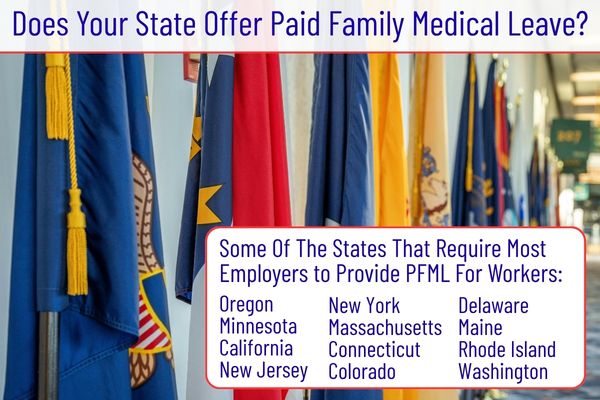
As of June 2026, 14 states and Washington DC require most private employers with workers in that state to offer paid family and medical leave, although programs may go by different names.
Here’s an overview of states that currently offer paid family medical leave (PFML), the maximum benefit in each state, and two states with programs in the works right now.
Oregon
Oregon’s PFML program is one of the best in the country for its generous maximum weekly benefit of $1636 for up to 12 weeks in 2026.
All private employers must provide this benefit and employers must pay at least 40% of the total premium cost, which is 1% of an employee’s wages up to the Social Security wage cap. Private group plans are available, giving benefits advisors more flexibility and choices.
Minnesota
Fully implemented in 2026, Minnesota’s PFML plan gives workers in the state 12 weeks for paid family leave or medical leave (up to 20 weeks combined), with a maximum benefit equal to the state’s average weekly wage for the year. Premiums are 0.88% of an employee’s wages, split 50/50 between the worker and employer. Private plans are available.
California
California has had a mandatory PFL program since 2004, offering benefits for up to 8 weeks in any 12-month time frame. The maximum benefit is $1,765 per week in 2026 and it’s underwritten by the Employment Development Department (EDD) with no private options.
New Jersey
New Jersey was the first state to provide mandated temporary disability benefits back in 1948. In 2009, the state added a family leave insurance (FLI) component to its program, allowing for 12 consecutive weeks or 56 days (8 weeks) of intermittent leave for caregiving or bonding. Workers can collect up to 85% of their average weekly wage up to the cap for that year.
New York
Years after California and New Jersey, New York launched the modern trend of paid family leave with the most robust program in the US in 2018. Today, PFL in NY provides job-protected paid leave for caregiving, bonding, or military exigency and up to $1,228 weekly to claimants. It’s 100% employee funded, with premiums at 0.432% of wages, with private plans available.
Massachusetts
Massachusetts implemented PFML in 2021, coming in ahead of New York and New Jersey with its maximum benefit amount of $1,230 in 2026. Workers can take 12 weeks of family leave, with up to 26 weeks combined medical and family leave allowed in any 12-month period. It’s 100% employee-funded with private plan options through employers.
Connecticut
Connecticut followed neighboring Massachusetts to introduce PFML in 2022. The maximum benefit is $1,016 in 2026, fully funded by employees at a premium rate of 0.5% of their wages. Connecticut offers 12 weeks, combined, for family or medical leave with an additional 2 weeks for pregnancy complications. Private plans are available.
Colorado
Colorado offers a generous maximum PFML benefit of $1,381 in 2026, with up to 12 weeks for PFML and an additional four weeks for pregnancy complications. The premium rate is 0.9% of worker’s wages, split 50/50 between the employee and employer in businesses with 10 or more employees. In smaller companies, the employee pays the full premium cost. Private group plans are available.
Delaware
As of 2026, employees in Delaware have access to paid leave through the state’s family and medical leave insurance (FAMLI) program or through private insurance carriers. The benefit pays a maximum of $900 per week for up to 12 weeks, depending on the reason for the claim.
Delaware has varying requirements depending on the size of the company; only businesses with over 25 employees must provide full coverage for medical leave, parental leave, family caregiving and military exigency. Businesses with 10+ employees must provide parental leave. Medical leave and caregiving leave only covers up to six weeks every 24 months, while parental leave covers 12 weeks per year.
Maine
Maine’s PFML program went into full effect in May 2026, giving eligible workers up to 12 weeks paid leave for medical reasons, bonding or caring for a new child, caring for a family member, military exigency, or safe leave.
The maximum weekly benefit is $1,199 in 2026 and is tiered so lower wage earners receive a higher percentage of their wages. Private plan options are available through select insurance carriers.
Rhode Island
Rhode Island has offered paid family and caregiving leave, Temporary Caregiver Insurance, since 2014. Parental leave allows up to six weeks time off with partial wage replacement to care for a newborn baby, adopted child or foster child within the first year. Family leave offers six weeks job-protected leave and partial wage replacement to care for a seriously ill family member. Benefits are employee-funded and underwritten by the state.
Washington
Washington introduced paid family and medical leave in 2020, allowing up to 12 weeks paid family or medical leave (16 weeks combined) within a 52-week period. Parents can take an additional two weeks for pregnancy complications. Reasons for leave include parental bonding, postpartum recovery, family caregiving, or an employee’s own serious health condition. The maximum weekly benefit is $1,647 in 2026.
Washington DC
Washington DC has administered a Universal Paid Leave (family and medical benefits) program since 2020, with workers able to file claims since October 1, 2022. The benefit is fully funded by employers and pays up to 90% of a worker’s average weekly wage, up to a maximum benefit of $1,190.
Employees can claim up to 12 weeks of parental leave, family leave, or medical leave, combined, in any 52-week period, plus an additional two weeks prenatal leave.
There’s no private plan option, and employers fund the benefit, paying 0.75% of an employee’s gross average weekly wages.
Upcoming Programs
In 2026, Maryland and Virginia announced family and medical leave insurance programs. Payroll deductions in Maryland will begin on January 1, 2027, according to the most recent updates, and employees can claim benefits beginning January 1, 2028.
Virginia’s program was signed into law on April 22, 2026. Payroll deductions are expected to begin April 1, 2028, and employees can begin taking paid leave December 1, 2028. Currently, Virginia has a voluntary paid family leave program that includes 12 weeks paid maternity benefits for 12 weeks following the birth of a child. Conclusion
Conclusion
Unlike most economically developed countries, the US lacks a comprehensive, broad-based federal parental leave program.
Paid family and medical leave programs across the US help fill gaps for working parents. If you’re expecting a baby or planning to adopt or foster a child, you should be aware of the laws in your state and speak to your HR or benefits department about filing a claim when the time comes.
The information provided on this website is for general informational and educational purposes only and should not be considered legal, financial, or insurance advice. While we strive to keep content accurate and up to date, insurance laws, policies, and regulations can vary by state and may change over time.
Nothing on this site constitutes professional advice or a recommendation of any specific insurance product, provider, or strategy. You should consult with a licensed insurance agent, financial advisor, or legal professional regarding your individual situation before making any decisions.
Sources
- https://insurancewholesaler.net/what-is-the-best-state-for-paid-family-leave/
- https://insurancewholesaler.net/us-lags-behind-developed-countries-for-paid-parental-leave/
- https://www.nj.gov/labor/myleavebenefits/worker/fli/index.shtml
- https://labor.delaware.gov/delaware-paid-leave/
- https://www.coloniallife.com/paid-leave-laws/Washington
- https://insurancewholesaler.net/virginia-passes-mandated-paid-family-medical-leave-pfml-law/
- https://www.coloniallife.com/paid-leave-laws/washington-dc