
When you shop for home and auto insurance can affect your rates as much as where you shop. Most people don’t know that you can save money on home insurance by shopping in the winter. On the other hand, shopping for car insurance in late fall, mainly December, may help you avoid rate hikes that often come with the new year.
Shopping for insurance isn’t like buying large kitchen appliances, bedding or school supplies. Home and auto insurance companies don’t hold seasonal sales like retailers. There’s no Amazon Prime Day for home and auto insurance.
But insurance rates may increase or decrease based on supply and demand and the frequency and severity of claims. Understanding these market fluctuations can help you time your purchase and find the best rates on home and auto insurance.
Best and Worst Times to Shop for Home Insurance
Home insurance rates often spike in May in anticipation of summer storms and hurricane season across most of the US. They stay elevated throughout the storm season, from May through October and sometimes into November as home insurance companies recover from paying out seasonal claims.
Claims due to winter storms and ice may also lead to higher home insurance rates on the national level. But these hazards typically aren’t as costly as hurricanes and summer storms.
Eight out of 10 of the world’s costliest natural disasters were hurricanes that took place in the US between August and October, according to data from the Insurance Information Institute.
For instance, Hurricane Katrina, in August 2005 resulted in $102 billion in insured losses across the US. Hurricane Ian in September 2022 cost the US and Cuba $56 billion. Other hurricanes in the US also cost tens of billions. These losses were concentrated between August and September, with Hurricane Sandy, in October 2012, as the late-season outlier.
In November, insurance companies are still responding to claims and trying to make up for these losses. By January, the market starts to stabilize a bit from these claims. That makes January through March the best time to buy home insurance to find the lowest rates across the country.
How the Real Estate Market Affects Insurance Costs
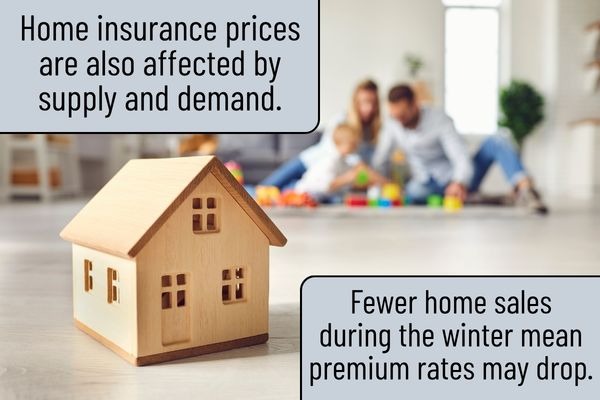
Home insurance prices are also affected by supply and demand. Home buying slows during the winter months. Fewer home sales during the winter mean fewer people are buying new home insurance policies, so premium rates may drop as a result of decreased demand.
People prefer to move during the summer, when children are home from school. This is especially true for parents who would rather their children start in a new school at the beginning of the school year to ease the transition.
Apart from catastrophic storms, the weather is generally better in most parts of the country in the summer, too. Homebuyers and sellers don’t have to contend with cold weather, snow and ice that can make moving more difficult.
Since home sales begin ramping up in the spring and summer, this also leads to increased home insurance prices.
Shop Around If You’ve Made Specific Home Improvements
From a national perspective, shopping for home insurance in January, February, or March may help you find the best prices.
But certain home improvements may also affect your rates, making it worthwhile to shop around at other times of the year if you’ve made changes to your home. If your current insurance company doesn’t offer you a discount for these upgrades, shop the policy around to find a carrier that will.
New roof: Getting a new roof installed before storm season is a smart move to protect your home. It may also lead to discounts of up to 20% on your home insurance premiums.
Storm shutters: Adding impact-rated storm shutters can save 10% to 15% on your home insurance policy, especially in hurricane-prone regions. You’re most likely to get the discount if the system is professionally installed and constructed to meet state building codes.
Monitored alarm and security systems: Monitored alarm systems may also yield home insurance savings. Common systems include fire detection, burglar alarms and security cameras. To qualify for discounts, they typically must be professionally monitored, with alerts sent to local first responders.
Water leak detection: Installing water leak sensors combined with whole-home shut-off valves that automatically turn off the water if the sensors detect a leak can also save you money on home insurance, since water damage not related to flooding is a major cause of insurance claims. Water damage claims cost an average of $13,954 and, along with freezing, make up 29% of all home insurance claims, according to RubyHome.com.
Best Time to Shop for Auto Insurance
Unlike home insurance, auto insurance rates are impacted more by personal factors, like your driving record, than by national trends.
However, since many auto insurance providers also write home insurance policies, it’s best to avoid shopping for car insurance in the summer and fall. Catastrophic home insurance claims caused by natural disasters like hurricanes can affect car insurance rates as insurance companies struggle to retain profit margins.
The best time to shop for auto insurance, in general, is December. That’s because auto insurance companies often increase rates at the beginning of the year. Shopping around after storm season but before rates increase can help you secure lower premiums for the next six to 12 months.
Other Times to Shop for Car Insurance
Regardless of the time of year, you should shop around for car insurance, or call your current insurer to review your policy, under the following circumstances:
You took a defensive driving class: Many states mandate auto insurance discounts for drivers who take a defensive driving class. For instance, New York drivers save 10% for three years. You may even be able to take the class online.
Your credit score improved: Most states, with the exception of California, Hawaii, Massachusetts, and New York, allow auto insurers to use your credit information as a factor in determining car insurance rates. If your score has improved substantially because you’ve significantly paid down debt, it’s worth shopping around for better car insurance rates.
You’ve stopped commuting: The annual mileage you put on your car also affects rates. If you’ve stopped commuting, got a job closer to home, or changed how much you drive for any reason, it’s a good time to revisit your policy or shop for new insurance.
You paid off your car loan: If you no longer have a car loan, you might want to remove the comprehensive or collision coverage that lenders require. However, make sure you have enough emergency reserves to replace your vehicle if it’s wrecked in an accident.
Your policy is up for renewal in four to six weeks: Plan ahead before your auto insurance renewal date to shop around for a better rate. Some insurance companies offer early-bird rates for signing before your old policy is set to expire. This also gives you plenty of time to compare your options without feeling pressured to renew with your current carrier.
Closing Thoughts
It’s smart to shop for home and car insurance at least once a year to check that you aren’t overpaying for your policy. Shopping in the winter for home insurance can save you hundreds of dollars a year, while shopping for car insurance in December may help you avoid beginning-of-year rate hikes. Make sure you’re comparing similar coverage levels and deductibles to get the best premium rates.
The information provided on this website is for general informational and educational purposes only and should not be considered legal, financial, or insurance advice. While we strive to keep content accurate and up to date, insurance laws, policies, and regulations can vary by state and may change over time.
Nothing on this site constitutes professional advice or a recommendation of any specific insurance product, provider, or strategy. You should consult with a licensed insurance agent, financial advisor, or legal professional regarding your individual situation before making any decisions.
https://www.iii.org/fact-statistic/facts-statistics-us-catastrophes
https://www.msn.com/en-us/money/personalfinance/can-home-upgrades-lower-your-insurance-costs
https://iprotectinsurance.com/storm-shutter-installations-insurance-benefits
https://www.rocketmortgage.com/learn/best-time-of-year-to-buy-a-house
https://www.rubyhome.com/blog/water-damage-stats
https://www.idrivesafely.com/defensive-driving/trending/which-states-allow-online-defensive-driving
https://www.newyorksafetycouncil.com/defensive-driving-course
https://www.geico.com/living/does-credit-score-affect-car-insurance