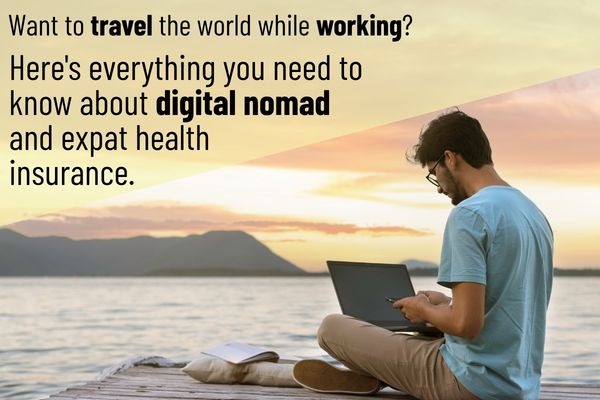
Working from a beach in Bali or a co-working space in Lisbon loses its appeal fast if a sprained ankle or a bad case of food poisoning turns into a hospital bill you have to cover out of pocket. If you’re living or working outside the U.S. for an extended period, your current health insurance may not cover that bill. With remote work on the rise, it’s easy to swap a home office for a different country every few months. And a growing number of governments have responded with digital nomad visas designed specifically to attract workers who have the flexibility to work from anywhere. If you’re looking to travel the world while continuing to work, here’s everything you need to know about digital nomad and expat health insurance, including why U.S. policies won’t cover you, why you aren’t covered by local insurance programs, and how to shop for health insurance coverage when living outside the U.S.
Why Your U.S. Health Insurance Won’t Follow You Abroad
Most Americans buy health insurance through an employer, the ACA marketplace, or Medicare. These plans are built around domestic provider networks and pay claims for services offered through hospitals and doctors in specific states. However, none of those contracts extend to a clinic in Chiang Mai or a hospital in Mexico City. Once you leave the insurance company’s network, the insurer won’t pay the bill, even when your claim is legitimate and would be covered at home.
Some medical plans advertise “emergency coverage abroad,” but it’s important to read the fine print. Those limited benefits are typically built for a short vacation, rather than an extended trip outside the U.S. Even when health insurance offers coverage outside the U.S., benefits are typically capped at a low level, only cover true emergencies, and exclude ongoing prescriptions, routine doctor visits, and other preventive care.
Medicare is even more restrictive. Seniors traveling internationally quickly realize this healthcare plan generally doesn’t pay for care outside the U.S. at all, with only narrow exceptions. If you’re spending months overseas, buying a travel rider on top of your domestic medical insurance won’t protect you from medical bills.
If you’re lucky enough to find a medical plan that covers out-of-country care, there’s still the problem of paying for medical services. Because international doctors and providers aren’t part of the insurance company’s network, you must pay upfront and then submit receipts for reimbursement. A small doctor bill or prescription is a financial hassle, but a surgery costing thousands of dollars might overwhelm your finances. And international doctors, hospitals, and other medical providers typically require services to be paid upfront before they take care of you.
We’ve all had to fight for insurance coverage for services provided within the U.S. Imagine how much more difficult it could be to fight for a claim outside the U.S. with a traditional health insurance company.
Why Local Health Insurance Won’t Cover You Either
It’s tempting to assume you can just lean on the healthcare system wherever you’re staying, especially in countries known for strong public healthcare. In practice, most national health systems are funded through residency, work permits, or local tax contributions. You won’t qualify simply by being physically present in the country. Digital nomads working for a U.S.-based employer or their own business typically don’t pay into that country’s healthcare system, so they don’t qualify for its benefits.
This is exactly why so many digital nomad visa programs require applicants to show proof of private international health insurance as part of the application. Governments know nomads fall outside their public systems, so they build the requirement into the visa application process. Without global health insurance, you’re not covered by the country you left or the country you’re currently in. Buying medical insurance that ensures you’re covered if you get sick or injured is the responsible thing to do.
Travel Insurance vs. Nomad Insurance vs. Expat Insurance
These terms often get used interchangeably, but they’re not the same product.
- Travel insurance is built for short trips. It covers trip cancellation, lost luggage, flight delays, and emergency evacuation, with medical coverage as a secondary feature.
- Expat insurance generally assumes you’ve settled in one country. These policies are ideal when you’re in a country for an extended period or working for a company in a specific location.
- Digital nomad insurance is for people who keep moving. This is the medical insurance you need if you don’t want to be tied down to a specific country and want to keep your options open.
International health insurance is built for long-term, comprehensive care. These policies cover claims for routine doctor visits, ongoing prescriptions, mental health support, and hospital stays.
What to Compare When Shopping for a Policy
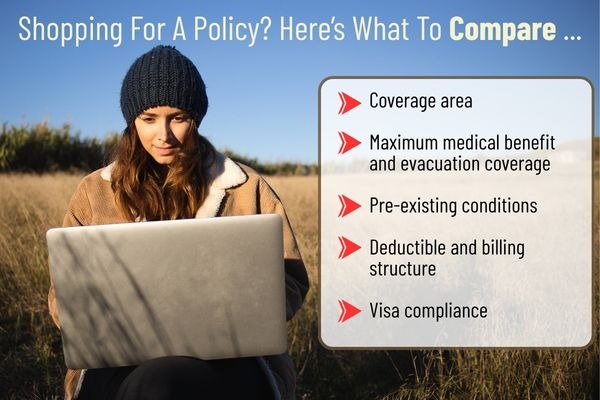
If you’ve decided that global health insurance is right for your situation, here are a few of the things you should compare when shopping for a policy:
- Coverage area. Some plans exclude the U.S. entirely (and cost less as a result), while others cover you worldwide.
- Maximum medical benefit and evacuation coverage. Emergency medical evacuation can run into six figures without it.
- Pre-existing conditions. Coverage varies widely by provider and plan tier. If you have existing medical conditions, they may be excluded from coverage completely or for a specific timeframe.
- Deductible and billing structure. Monthly, cancel-anytime plans suit people still figuring out their route. Think about how you’ll pay premiums if you’re moving locations regularly.
- Visa compliance. If you’re applying for a digital nomad visa, confirm the policy meets that country’s specific minimum coverage requirement. Digital nomads and expats who buy generic travel insurance may see their visa applications rejected.
Providers commonly recommended in this space include SafetyWing (budget-friendly, popular with slow travelers), Genki (strong outpatient and preventive coverage), Cigna Global (large global network, good for families or more complex needs), IMG Global (highly customizable, no restrictive provider network), and Allianz Care (family-friendly plans with fast claims turnaround). No single provider is “best.” The right global health insurance policy depends on your travel pattern, budget, and healthcare needs.
Can You Deduct Your Premiums as a Digital Nomad?
If you’re self-employed, you may be able to deduct your health insurance premiums through the IRS Self-Employed Health Insurance Deduction. Examples include freelancing, running your own business, or working as a 1099 contractor. Insurance premiums are an above-the-line deduction, which means you can claim these expenses without itemizing.
In order to deduct your global health insurance premiums, you’ll need to meet a few conditions. Your self-employment should have a net profit. You cannot be eligible for a subsidized employer plan (including through a spouse). The deduction cannot exceed your net self-employment income for the year. International or nomad-specific policies generally qualify as long as they meet the general IRS definition of health insurance.
Where it gets more complicated is the overlap with the Foreign Earned Income Exclusion and multi-state residency questions many nomads face. It is a smart idea to consult with a tax professional or hire one to file your taxes. While this is an additional expense, it is worth it to avoid any problems with your tax returns.
How to Decide If You Should Buy Your Own Policy
Before buying a global health insurance policy, it is important to ask questions of the insurance broker or insurance company.
- Employment status. Self-employed and freelance workers almost always need to purchase their own policy. W-2 remote employees should check whether employer benefits extend internationally. If your company has offices in the country you’re in, you may be able to purchase insurance through your employer.
- How long and how often you’ll be abroad. A short remote work stint might be fine with travel insurance. However, an open-ended nomad lifestyle where you frequently move between countries or live in one country for an extended period usually calls for full international health coverage.
- Visa requirements. Confirm your destination’s minimum coverage rules before you buy. This helps you buy the right policy and set aside money for the premiums in your budget.
- Health needs. You may need to buy a more comprehensive policy if you have chronic conditions or regular prescriptions. If you have a spouse or children, their medical needs should factor into the equation as well.
- Your risk tolerance. A lean, emergency-only plan works for some travelers who are healthy and don’t participate in risky adventures. Risk-averse travelers who want to avoid financial uncertainty may select broader coverage with a higher monthly premium.
The Bottom Line
While some U.S. health insurance plans offer short-term coverage while on vacation, traditional health insurance does not cover digital nomads and expats living outside the U.S. for extended periods. And without becoming a citizen of that country or paying taxes, you may not qualify for medical insurance in the country where you got sick or injured. Fortunately, you can reduce your risk of devastating medical bills by purchasing a global health insurance policy. The prices vary based on where you’re traveling and other details, but the cost can be worth the peace of mind.
The information provided on this website is for general informational and educational purposes only and should not be considered legal, financial, or insurance advice. While we strive to keep content accurate and up to date, insurance laws, policies, and regulations can vary by state and may change over time.
Nothing on this site constitutes professional advice or a recommendation of any specific insurance product, provider, or strategy. You should consult with a licensed insurance agent, financial advisor, or legal professional regarding your individual situation before making any decisions.
Sources
- Allianz, Nomad Health Insurance. Accessed September 15, 2026.
- SafetyWing, Global health and travel insurance for people who live and work anywhere. Accessed September 15, 2026.
- Feather Insurance, Digital nomad health insurance: 2026 guide. Published June 3, 2026.
- NerdWallet, 9 Best Nomad Travel Insurance Options. Published December 23, 2025.
- April International, Digital nomad and remote work visas. Published May 11, 2026.
- Seven Corners Travel Insurance, Expat & Digital Nomad Insurance: Why You Need It & What’s Available. Published July 29, 2026.
- Allianz, Guide to Digital Nomad Insurance Needs Abroad. Published June 12, 2026.
- Taxes for Expats, Digital nomad taxes: what US citizens working abroad need to know (2026). Published September 3, 2026.
- American Pacific Tax, Avoid Missing These Vital Digital Nomad Tax Deductions US. Published April 23, 2026.