You’ve built a solid financial plan and think you have all the right insurance policies. But one type of protection that people often miss is long-term care insurance. Even an average stay in a long-term care facility can devastate a family’s finances. In fact, nearly 7 in 10 people who turn 65 today will need some form of long-term care before they die. If you choose a private nursing home room, you can expect to pay around $9,700 a month. Long-term care insurance gives you the money you need to pay for this care, without having to raid your savings and retirement nest egg. Here’s how LTC insurance actually works, what it covers, how it’s different from Medicare, and who should seriously consider buying it.
What Long-Term Care Insurance Actually Covers
Long-term care insurance provides money to pay for care as you get older or when you’re unable to care for yourself. Even when you have a long-term care insurance policy, there are rules for when it will pay for your care. In general, the covered services include help with activities of daily living (such as bathing, dressing or eating). Some policies also cover respite, hospice, and rehab care.
Your policy won’t be a blank check to spend any amount you want. Instead, long-term care policies are based on a daily or monthly benefit amount up to a policy maximum. However, LTC benefits don’t start right away. Before the policy pays out, there is generally a waiting period of 90 days or longer. Policy premiums rise as benefits increase and when choosing a shorter waiting period.
Care settings
A long-term care policy typically covers the following types of services:
- In-home care from a paid aide
- Adult day care programs
- Assisted living facilities
- Memory care units
- Nursing home stays
Services
Coverage generally kicks in once you need hands-on help with what insurers call the six “activities of daily living.” These activities are defined as bathing, dressing, eating, using the toilet, getting in and out of bed and chairs, and managing incontinence. Generally, you must need help with at least two of these six activities before a policy pays for long-term care. However, if you’re cognitively impaired, then you generally don’t need another factor before benefits begin.
Some policies extend benefits to hospice, respite care for family caregivers, or rehab following a hospital stay.
Long-Term Care Insurance vs. Medicare (What Medicare Doesn’t Cover)
Many of my clients have wrongly assumed that Medicare and Medicaid will take care of them as they get older. These government programs are a valuable part of retirement planning, but if you’ve managed to save a good nest egg for retirement, they aren’t the answer to your long-term care needs.
What Medicare covers
Medicare pays for short-term, medically necessary care. This could be a stint in a skilled nursing facility after a hospital stay or limited home health visits tied to a specific medical condition. I always explain to my clients that these benefits focus on recovery from illness or injury with a defined endpoint.
What Medicare doesn’t cover
Medicare generally will not pay for the ongoing, non-medical help with daily living that most people actually need as they age. Its benefits are designed around medical care and recovery. If you need someone to help you bathe and dress every day indefinitely, that’s outside what Medicare is designed to do.
Medicare is not a long-term care plan. Ongoing care is exactly what long-term care insurance is designed to fill.
How does Medicaid work?
Medicaid is a program that combines funding from federal and state resources to pay healthcare and long-term care costs. However, you must have limited income and resources in order to be eligible for it. Additionally, not all nursing homes accept Medicaid payment for their services, so you may not be able to use it at your preferred long-term care facility.
Your eligibility varies based on which state you live. For example, 2026 limits for a single person in Texas are no more than $2,000 in countable assets and income of no more than $2,982 per month. In general, if you have assets above a maximum level, you must spend those household assets below that threshold before Medicaid will start paying.
These asset and income limits can create problems for married seniors who are paying for one spouse’s care, while leaving the other spouse destitute. The healthy spouse can be left in a bad financial position, unable to pay for regular monthly expenses or their own future long-term care needs without relying on government assistance.
How an LTC Policy Actually Works
Once you decide to buy, you’re really choosing four factors within a policy. Each one of these has an impact on your premium, just like the type of car you drive, how many miles per year, and the deductible amount impact the cost of auto insurance.
- Daily or monthly benefit amount. The dollar amount the policy pays toward your care.
- Elimination period. A waiting period before benefits begin, usually 30 to 90 days. This acts like a deductible since you’ll need to pay for care out of pocket before benefits are paid out. In general, the longer the elimination period, the lower your premium will be.
- Benefit period. The length of time that you’ll receive benefits. Most insurers offer LTC policies for a set number of years, but some offer policies with lifetime benefits.
- Inflation protection. This is an optional rider that increases your benefit amount over time based on annual inflation rates. This is a valuable option when you buy at a younger age because inflation can erode benefits over time. For example, if you’re in your 50s and buying a policy, your benefit could lose half of its purchasing power over 20 to 30 years.
Who Should Buy Long-Term Care Insurance
Even when you’ve bought into the idea that long-term care insurance is a good choice, it can be hard to tell who should actually buy long-term care insurance. Here are a few instances of who are good candidates for this coverage versus others who should skip buying it.
Good Candidates for Long-Term Care Insurance
- People in their 50s to early 60s with moderate-to-substantial assets they want to protect
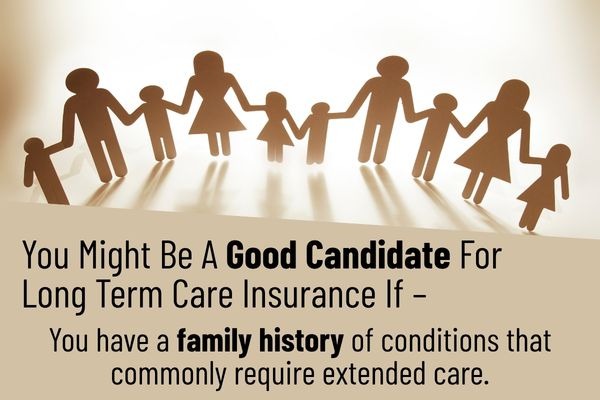
- Anyone with a family history of conditions that commonly require extended care
- People who want to leave an inheritance instead of spending it all on a nursing home
People Who Can Probably Skip It
- Those with very limited assets who would likely qualify for Medicaid anyway
- High-net-worth individuals who can comfortably self-insure the cost of care
For those of us in the middle, long-term care insurance is a smart choice. We’ve saved too much to qualify for Medicaid, but we’re not wealthy enough to easily absorb a care bill of $150,000 or more. Remember that the timing of when you buy long-term care insurance matters just as much as the types of coverage. Buying at a younger age while you’re healthy typically gets you lower premiums and a better shot at approval.
Features and Exclusions to Know Before You Buy
Before you purchase long-term care insurance, it is important to understand what protections are guaranteed and where insurers can say no.
- Guaranteed renewability. Federal law requires LTC policies to be guaranteed renewable, which means the insurer can’t cancel your coverage as long as you keep paying. They can raise premiums, but only across your entire rate class. They can’t single you out and raise your premiums individually.
- Pre-existing condition waiting periods. Many states allow insurers to exclude pre-existing conditions for up to six months after your policy starts. After that window, they generally have to cover it.
- Common disqualifiers. Insurers can decline applicants who already have a disability requiring care, a diagnosed cognitive impairment like dementia, a terminal illness, or a recent major hospitalization or surgery.
- Premium increase risk. Unlike a lot of insurance products, LTC premiums are not locked in for life. Insurers have raised in-force premiums when actual claims came in higher than their original pricing assumed.
It is important to read the outline of coverage before you buy. Otherwise, you could be in for a surprise when a claim gets denied. As I remind clients, there’s a specific cost to long-term care for insurers. If someone is offering a substantially cheaper policy, there’s probably something missing in your coverage.
The Bottom Line
Long-term care insurance covers the one thing Medicare won’t: the extended, non-medical help most of us will eventually need. It’s worth serious consideration if you’re in your 50s or early 60s with enough assets to protect but not so much that self-insuring is a non-issue. Buy early, understand your elimination period and benefit period before you sign, and read the exclusions section to know when the insurer won’t pay. Wealth investors and those with very few assets can skip buying a LTC policy since they can self-fund or rely on Medicaid benefits, respectively, to cover the cost of long-term care.
The information provided on this website is for general informational and educational purposes only and should not be considered legal, financial, or insurance advice. While we strive to keep content accurate and up to date, insurance laws, policies, and regulations can vary by state and may change over time.
Nothing on this site constitutes professional advice or a recommendation of any specific insurance product, provider, or strategy. You should consult with a licensed insurance agent, financial advisor, or legal professional regarding your individual situation before making any decisions.
Sources
- AARP, Understanding Long-Term Care Insurance. Published February 6, 2024.
- Life Happens, When does a long-term care insurance policy start to pay for care? Accessed August 1, 2026.
- Medicare.gov, How can I pay for nursing home care? Accessed August 3, 2026.
- Medicare.gov, Long-term care. Accessed August 3, 2026.
- A Place for Mom, Medicaid Long-Term Care: What Is It and What’s Covered? Published April 14, 2026.
- LongTermCare.gov, How Much Care Will You Need? Accessed August 3, 2026.
- Senior Simple, Long-Term Care Insurance Explained: Do You Actually Need It? Published June 3, 2026.
- MedicaidLongTermCare.org, Texas Medicaid Long Term Care Programs, Benefits & Eligibility Requirements. Published December 18, 2025.