Insurance is one of the most reliable pieces of your financial plan. It reduces or eliminates the cost of major risks for a reasonable price. However, buying insurance doesn’t always prevent major mistakes from happening. While most money mistakes aren’t dramatic, others can be quite devastating to your finances. Luckily, you can avoid these wallet-busting mistakes if you know about them ahead of time. Here’s where those expensive insurance mistakes show up across the most common types of policies people carry, and how to fix them before they cost you.
The Types of Insurance Most People Carry
Most working adults juggle some combination of five policies: auto, homeowners or renters, health, life, and disability insurance. Each of these policies protects a different part of your financial life, and each comes with its own version of the same potential insurance mistake. People buy the policy based on their current financial situation, then never revisit their coverages as their lives change.
In my experience, when people are young, they focus on finding the lowest premium because money is tight. Yet, as their income increases and debt gets paid off, they don’t adjust their coverages to match their current risk. A life insurance policy you buy when you’re single and making $50,000 a year is usually not enough when you’re making $100,000, married with two kids, and have a $500,000 mortgage.
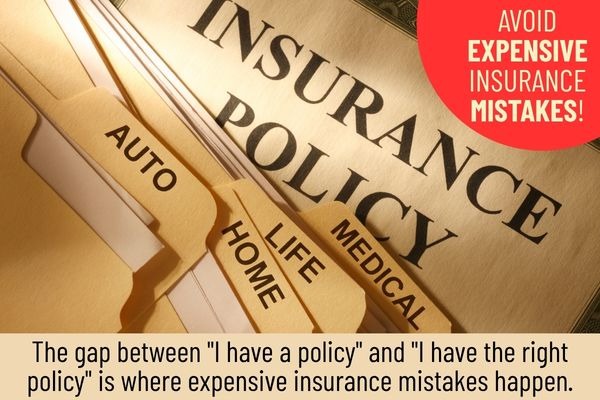
The gap between “I have a policy” and “I have the right policy” is where the expensive insurance mistakes hit people the hardest. They assume that having a policy means that they’re covered. But, in reality, the policy only covers a fraction of their needs.
Auto Insurance: Choosing Price Over Protection
Most drivers assume that all auto insurance policies are the same. So, they opt for the cheapest auto policy they can find. They focus on the monthly premium and select a liability-only plan that meets the state minimum insurance requirements. While this makes it legal to drive, you may not fully understand the risks you face.
When you have liability-only coverage, your policy only pays for the damage or injuries that you cause in an accident. It does not protect you or your own vehicle. And the minimum coverage levels may not be enough to pay for the damage and medical bills you caused. You have to pay out of pocket to repair your own vehicle, and if claims against you are greater than your coverage, you could be sued for the difference. For example, if you hit an expensive car, cause damage to multiple vehicles, or badly injure someone, the bills could be $100,000 or more. Where would that money come from?
How to Mitigate This Risk
- Compare coverage types, not just the monthly premium, before you buy.
- Understand that your state’s minimum required coverage is the minimum you must have to drive legally. It is not the recommended coverage for someone in your situation. Instead, it’s usually just enough to cover the other driver.
- Add collision and comprehensive coverage if you couldn’t comfortably pay for major repairs or a totaled vehicle out of pocket.
Homeowners or Renters Insurance: Underinsuring the Things That Matter Most
A common mistake for homeowners is insuring their home based on its market value rather than what it would actually cost to rebuild it. While home values have risen dramatically over the past five years, so have the costs to build or repair a home. Lumber, steel, labor, and other inputs have all increased faster than inflation. And when the eventual downturn in home prices happens, that doesn’t mean that the cost to rebuild a home will go down.
Another mistake with homeowners and renters insurance is assuming your belongings are fully covered. In my experience, jewelry claims are typically capped at $1,500 to $2,500 by standard homeowners and renters policies. These smaller coverage limits are often too low to reimburse the cost of replacing many people’s actual collections.
How to Mitigate This Risk
- Insure your home based on what it costs to rebuild, not how much you could sell it for.
- Add a scheduled personal property rider for jewelry, art, or collectibles above your policy’s standard limit.
- Revisit your coverage after any renovation that changes what it would cost to rebuild your home.
Health Insurance: Choosing the Lowest Premium
Deciding which health insurance plan is the best one for your wallet can be challenging. While a low-cost plan can reduce the impact on your paycheck, you can be responsible for more out-of-pocket costs if you have to actually see a doctor or visit the emergency room. Plans with the cheapest monthly cost often come with a much larger deductible and higher out-of-pocket maximum or are more restrictive on which doctors you can see.
In my experience, healthy people assume that they’ll avoid major illnesses or injuries. You might save money every month right up until you actually need care. At that point, the “cheap” plan ends up costing you significantly more than a plan with a higher premium would have. For example, if you break a leg, get cancer, or develop a life-threatening illness, the doctor bills pile up quickly.
How to Mitigate This Risk
- Compare the total potential cost, meaning premium plus deductible plus out-of-pocket maximum, not just the premium.
- Factor in your actual expected healthcare usage rather than assuming the worst-case scenario won’t apply to you.
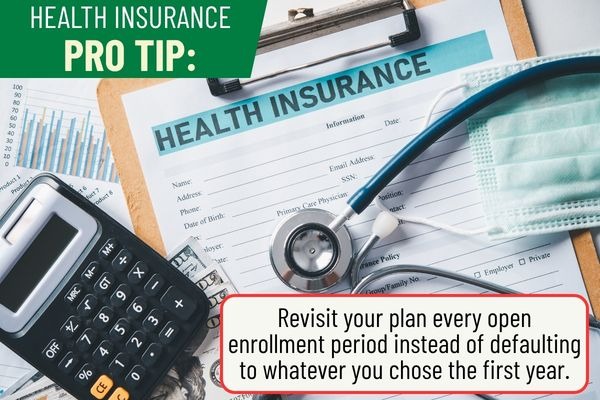
- Revisit your plan every open enrollment period instead of defaulting to whatever you chose the first year.
- Sign up for a Health Savings Account or Flexible Spending Account to set aside money for expenses that aren’t covered by insurance.
Life Insurance: Letting Coverage Go Stale
Knowing how much life insurance to buy can be challenging, especially when you’re young and on a budget. Yet, this can also lead to one of the most expensive insurance mistakes. While you personally won’t deal with the fallout, your family and loved ones that you leave behind will.
In my experience, people often buy life insurance when they get married or have their first child, but then they never look at it again. While they keep paying the premiums each year, the policy gets outdated as their finances change. The initial coverage amount no longer replaces their income as it used to, and it most likely doesn’t cover their mortgage balance, college for the kids, or a meaningful increase in household income. The policy still pays out as it was originally intended, but the money your family receives isn’t enough to meet their needs.
How to Mitigate This Risk
- Recalculate your coverage amount after every major life event, not just when you first buy a policy.
- Don’t rely solely on employer-provided group life insurance, since it doesn’t follow you if you change jobs.
- Set a recurring reminder to review your coverage every few years, even without an obvious trigger.
Disability Insurance: Assuming It’s Not Necessary
This is the mistake I probably see most often, mainly because people skip this coverage entirely. Many people feel that disability insurance is optional because a serious injury or illness feels like a low-probability event. However, a 2022 study by the Social Security Administration found that one in four people in their 20s will become disabled before reaching retirement age.
If you’re out of work for months due to a disability, your bills keep coming every month. How will you pay your mortgage, car payment, and other bills without a regular paycheck? The good news is that many employers offer disability coverage, and you can supplement those benefits with a policy of your own that you can keep, even if you change jobs.
How to Mitigate This Risk
- Don’t assume your employer-provided disability coverage is sufficient. Check the actual income replacement percentage and how long the benefit lasts.
- Consider an individual disability policy to fill the gap between your group coverage and your real income.
- Treat disability insurance as income protection, not an optional extra you’ll get around to later.
The Bottom Line
On a positive note, these expensive insurance mistakes share a common theme. You buy the policy once, but never revisit your decision to ensure that the coverage is still adequate to cover your needs. As I remind my clients, insurance isn’t something you set once and forget. It is important to review your coverages once a year and whenever a major life event occurs, such as getting married, having a baby, buying a new home, or changing jobs. At each of these milestones, your insurance needs can change dramatically. A policy that was adequate yesterday can be woefully inadequate once these changes take place.
The information provided on this website is for general informational and educational purposes only and should not be considered legal, financial, or insurance advice. While we strive to keep content accurate and up to date, insurance laws, policies, and regulations can vary by state and may change over time.
Nothing on this site constitutes professional advice or a recommendation of any specific insurance product, provider, or strategy. You should consult with a licensed insurance agent, financial advisor, or legal professional regarding your individual situation before making any decisions.
Sources
- Global Credit Union, 10 Common Insurance Mistakes to Avoid. Accessed August 31, 2026.
- FinGrad Blog, 5 Insurance Mistakes That Can Cost You Thousands. Published May 28, 2025.
- HealthCareInsider.com, 5 Mistakes People Make When Choosing Health Insurance. Published July 20, 2026.
- Briggs Agency, Five Insurance Mistakes That Can Cost You Thousands. Published August 26, 2026.
- Money Talks News, Beware These 7 Common Car Insurance Shopping Mistakes. Published May 27, 2026.
- LIMRA, Disability Insurance Awareness Month: Protecting Your Paycheck and Your Future. Published May 2, 2024.