You’re a safe driver, which protects your vehicle from damage and keeps your insurance premiums down. But what happens when someone else drives your car and gets into an accident? While you know you’re covered in a crash, does this protection extend to other drivers? In short, the insurance follows the car, not the driver, so your policy will pay for claims. But the answer is more complex and varies based on who is driving. Here’s everything you need to know about how coverage splits between your car and the other party, who’s automatically covered, how to protect yourself in advance, and what to actually do if you’re filing a claim.
How Your Insurance Covers Your Car Vs. The Other Car and People
When someone else crashes your car, how your car and others are treated depends on what type of insurance you have. Not only do the types of coverage matter, but the policy limits also factor into how claims are paid.
How Is Your Car Covered?
In an accident, most people worry about the financial risks of damage to other cars or objects or injuries to people. But what about getting your car repaired or replaced? The answer depends on what type of insurance you have. With collision coverage, your policy pays for your vehicle repairs regardless of who is at fault. Comprehensive coverage kicks in for non-collision scenarios, such as hitting a tree or a deer.
Luckily, all the coverages you have transfer to a driver who has permission to use your vehicle. However, in some cases, the insurer may have lower limits for permissive-use drivers than for the policy owner and named insured drivers.
How Are Other Cars and People Covered?
While most people are worried about what happens with their car when another driver gets into an accident, that’s not the only concern. Damaging someone else’s property or injuring someone can open you up to massive liability. Fortunately, your car insurance covers you against these claims as well, even when someone is borrowing your vehicle.
Your liability coverage (bodily injury + property damage) pays for the other driver’s damages and injuries if your permitted driver was at fault. You and the driver are protected up to your policy limits. For this reason, I always recommend clients to go beyond the minimum levels required and purchase higher coverage. This is especially important when you own substantial assets or have a high income potential because lawyers look for assets and income when assessing the potential for lawsuits.
If the property damage or injury claims exceed your coverage limits, the at-fault driver’s own policy can act as secondary coverage. Although your vehicle’s coverage is the primary insurance against claims, if the person who borrowed your car also has insurance, their policy can cover the excess.
When the other driver is at fault, neither your insurance nor the person who borrowed your car needs to worry. However, we all know that not every driver has insurance or, if they do, they may only have basic coverage that meets state mandatory minimums. When that happens, your uninsured/underinsured motorist coverage steps in to pay claims for damage to your vehicle and medical expenses.
Who’s Covered and Who Isn’t
It is important to understand who is and who isn’t covered when they’re driving your vehicle. This list covers a sample of the different types of drivers based on their relationship to you, and whether they would be covered under permissible-use policies.
- Spouse: Typically covered automatically as a named insured, even if not specifically listed, and even in another vehicle.
- Children: Licensed kids living in your household generally need to be listed. Many insurers assume that children living at home have “implied permission” to use your vehicle and can deny claims if they aren’t listed on the policy. College kids away at school can be removed from your policy while they are away, then added back when they return home.
- Siblings: Only covered if they live in your household (household-member rule) or you’ve explicitly added them. If your adult sibling is visiting from out of town, they are usually covered under one-off permissive use.
- Friends: They are covered for occasional, infrequent borrowing. Many insurers cap usage at 12 times per year before you need to add them to your policy.
- Coworkers: Coworkers are treated the same as friends, unless they’re using your car for work purposes. In that case, personal auto policies typically exclude coverage entirely.
Permissive Use vs Non-Permissive Use
While the relationship matters for car insurance, it also matters if you gave the other driver permission to drive your vehicle.
Permissive Use
When you let someone borrow your car, you’re giving them permission to be in charge of your vehicle. Even if they’re not named on your policy, your insurance is active during this time. If they get into an accident, then your insurance coverage is expected to pay any claims that occur.
Typically, permissive use covers people who don’t live at your same address and who use the vehicle fewer than 12 times per year. There is no additional cost to your premium when allowing someone to occasionally drive your vehicle. However, you may have an increase in premium if you need to add someone to your policy.
Keep in mind that all drivers who are expected to regularly use your vehicle should be listed on your policy. This allows the insurance company to accurately assess the risk of a claim and price your policy accordingly. If a driver is listed on your policy, some states may allow the insurance company to limit their claims exposure.
Non-Permissive Use
Non-permissive use occurs when someone borrows your car without your permission. This could be as simple as your roommate borrowing your car while you’re sleeping or as complicated as a thief stealing your car and getting into a high-speed chase with the policy. No matter the situation, when your vehicle is in an accident and you didn’t give permission, the driver’s insurance is expected to cover claims rather than your own.
If the driver doesn’t have insurance, you aren’t responsible for damage or injuries they cause. However, you can file a claim with your own insurance to cover repairs or replacement of your vehicle.
Exceptions to permissive use that turn permission to borrow your car into non-permissive use include:
- Business use: Any business activity, such as deliveries or transporting passengers.
- Criminal activity: Coverage won’t apply when the vehicle is used to commit a crime.
- Intentional acts: If a driver intentionally causes property damage or injures someone.
- Excluded drivers: Policy owners can specifically exclude individual drivers from coverage, even when given permission to borrow the car.
What You Can Do To Protect Yourself
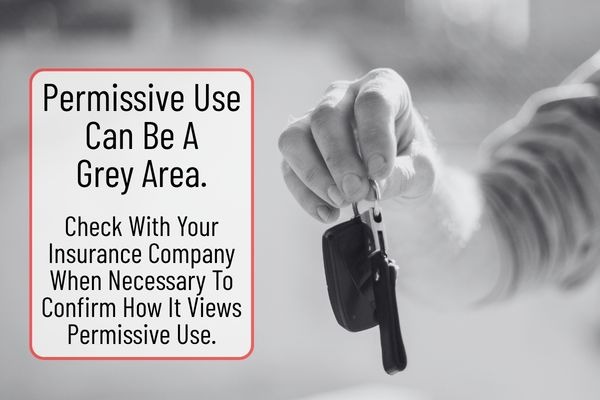
Since permissive use is somewhat of a grey area in auto insurance, it’s wise to take steps to protect yourself and your vehicle. Not all insurance companies view permissive use the same way. Contact your carrier to understand how they view permissive use before handing someone else the keys to your car. It’s also a good idea to understand your state’s at-fault and no-fault rules that determine who pays first when an accident occurs and there isn’t a definite answer to who is at fault in an accident.
If you’re going on a road trip or need someone to regularly drive your car, you can add them to your policy temporarily. While this will increase your premium for that period of time, it is better to be covered than have your insurance carrier deny a claim. When this happens with my clients, I remind them that they can keep auto insurance costs low by removing them once they stop using the car.
For people who don’t own a vehicle but occasionally drive yours, consider buying non-owner or umbrella coverage. These drivers may include your adult kids or frequent guests who have regular access to your car when visiting. This adds an extra layer of protection to ensure you and your vehicle are covered in case of an accident.
What to Do If You Need to File a Claim
If you’re ever in a situation where someone borrowed your car and crashed it, here’s how to file a claim with your insurance company.
- Document the scene. Get photos, other driver’s info, and a police report just as you would if you’d been the one driving.
- Confirm who was driving and whether they had permission. This determines whose policy is primary.
- Report it to your insurer promptly. Even if you think the other driver’s insurance should pay, reporting the accident timely protects your claim. In my experience, this is true if the accident is determined to be no-fault or if the other driver is uninsured or their policy limits aren’t enough to cover all expenses.
- Permissive vs. non-permissive use. If the driver wasn’t authorized, be ready to provide proof (such as a police report documenting unauthorized use), as your insurer may deny the claim without it.
- Discuss how to get reimbursed. Track how much you had to spend to cover your deductible and how much your insurance rate changes due to the claim. Have a conversation with whoever was driving about their responsibility to cover these costs. Remember that the higher insurance rates may last for years, so it’s not a one-time expense.
- If your claim is denied. Think about your next moves if your insurer denies coverage or your damages exceed your limits. You may need to file a claim with the driver’s own policy or ask them to reimburse you directly.
The Bottom Line
You may be trying to be a good friend, but letting someone borrow your car can be a risky proposition. If a driver crashes your vehicle, it could be your insurance policy that pays for claims rather than theirs. While your coverage follows the vehicle, even when someone else is driving, you could be on the hook if the claim is higher than your policy limits. It’s important to understand what permissible use is, and when someone needs to be added to your policy; otherwise, your insurer may deny the claim altogether. If someone else crashes your car, take immediate action and treat the situation as if you were the one driving.
The information provided on this website is for general informational and educational purposes only and should not be considered legal, financial, or insurance advice. While we strive to keep content accurate and up to date, insurance laws, policies, and regulations can vary by state and may change over time.
Nothing on this site constitutes professional advice or a recommendation of any specific insurance product, provider, or strategy. You should consult with a licensed insurance agent, financial advisor, or legal professional regarding your individual situation before making any decisions.
Sources
- Allstate, Does insurance follow the car or the driver? Published January 2026.
- Experian, What Happens if Someone Else Crashes Your Car? Published March 11, 2026.
- The Zebra, What is Permissive Use Car Insurance? Published June 10, 2026.
- Progressive, Does car insurance cover the car or driver? Accessed July 14, 2026.
- Progressive, What is an excluded driver on a car insurance policy? Accessed July 14, 2026.
- Insure.com, Who should be listed on your car insurance policy? Published May 11, 2026.
- AAA.com, Does Car Insurance Cover the Car or the Driver? Published February 27, 2026.
- NOLO.com, “Permissive Use” Drivers and Car Insurance Coverage. Published May 7, 2025.
- Insure.com, What happens if someone who isn’t on your insurance crashes your car? Published May 11, 2026.