Whether you own a home or rent, you probably have some sort of insurance coverage to protect your dwelling and its belongings from financial loss in case of a catastrophe. But if you run a business from your home or telecommute in a W-2 job, you might be underinsured, leaving your home and livelihood at financial risk.
Who’s at Risk? Work-at-home Labor by the Numbers
Nearly one-quarter of the labor workforce in the US telecommutes on an average workday, according to data from the US Bureau of Labor Statistics. Research from Stanford corroborates those figures, reporting that 27% of paid, full-time workdays take place remotely rather than in an office.
More than half (52%) of all US workers who can work from home, do so, at least in a hybrid arrangement, according to a recent Gallup poll.
Let’s not forget the 1099 contractors and small business owners who operate out of their homes, too. In total, 16.8 million Americans were self-employed in 2025, with 6.7 million incorporated business owners and 10.2 million 1099 contractors, according to US BLS data. Typically, many solopreneurs and gig workers operate out of their homes, even if their gig requires driving for delivery or ride-share services.
The types of insurance gig workers and W-2 employees may need if they work from home differs, but it’s important to review your options and make sure you’re not underinsured for your situation.
In-Home Business Insurance Endorsement
Your homeowner’s insurance, Parts A, B and C, covers your home, other structures on the property, and your possessions in the event of a fire, storm, and some other catastrophic events. Your insurance carrier may pay to replace (replacement value) or pay the cash value for damage to your home and items lost.
Meanwhile, coverage D may pay for food, housing and transportation if the loss means you can’t live in your home.
But your home insurance policy may not cover costs of expensive equipment or business inventory in your home.
If you’re an Etsy or eBay seller with an expensive 3D printer in your home, or an Amazon reseller who stores inventory in your basement, you may want to look into a home business endorsement to boost your coverage levels.
Likewise, see if your home insurance policy would cover office space if you’re temporarily displaced to a hotel room or trailer if you can’t live in your home after a fire or other natural disaster.
If not, you may want a rider to your policy or consider a business owner’s policy, detailed below.
Tip for Work-at-Home W-2 Employees: Be aware that your home insurance doesn’t cover damages to equipment your employer owns. But your employer’s insurance should cover the loss if it’s a covered event, such as a fire that is not your fault. If the company finds you liable for the damage, you might have to pay for it.
General Liability Insurance
Part F of your typical home insurance policy covers minor injuries and resulting medical bills that occur on your property. But it doesn’t cover injuries that might occur if someone is visiting your home for business reasons.
If you’re a consultant who invites clients to your home office for meetings or if you’re a local artist who has customers pick up pieces from your home, general business liability insurance will cover you if someone on a business-related visit falls and gets hurt on your front steps, for instance.
Liability insurance may also cover you against claims of faulty products, false advertising claims, copyright infringement, and legal fees. If you’re working on someone else’s property, as is the case with general contractors, interior designers, or landscapers, general liability insurance may pay claims against damage to their property.
Errors & Omissions Insurance
Errors & Omissions insurance is sometimes called professional liability insurance. In general, E&O covers you if your clients suffer a loss of income because of a mistake you made. Doctors and lawyers are often required to carry a special version of E&O insurance, called malpractice insurance.
Most other professions aren’t required to carry E&O insurance, but if you offer people advice or consulting on business or financial matters, it’s a good idea. If you’re an independent contractor, some businesses may require E&O insurance before they work with you.
E&O can cover you if your client loses income due to a missed deadline, negligence accusations, or accusations of libel.
Business Owner’s Policy
A business owner’s policy (BOP) combines general business liability insurance with property loss protection.
It can cover damage to your home office and your business equipment. It may also cover loss of income if your home’s damage means you’re unable to work, either because of loss of office space or loss of inventory.
Speak to an insurance broker to determine if you should bundle general liability coverage and property loss protection in a BOP.
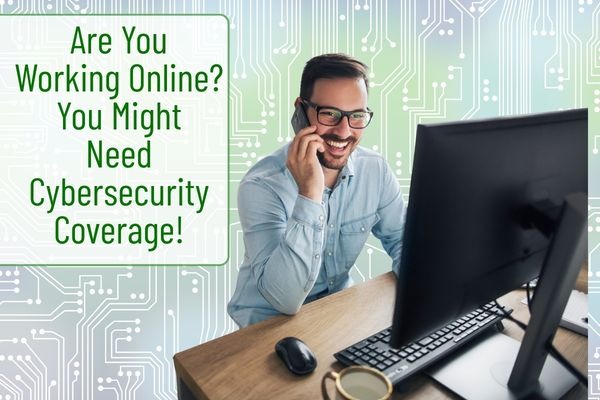
Home business owners may also want a policy that covers them for financial losses or loss of data caused by a data breach or cyberattack.
Work-from-home employees should find out if their employer’s policy protects them and covers their equipment if it’s involved in a cybersecurity breach that causes losses or damage to the company.
Business Interruption or Business Continuity Insurance
If you’re unable to work as a sole proprietor because of a natural disaster, business interruption insurance may replace that lost income. Likewise, it may help cover other operating expenses, taxes that come due while you’re not working, and business loan payments.
This insurance won’t cover the physical damage to your property, though. That would be covered by your home insurance policy if you primarily work from home.
Mandated Paid Family and Medical Leave or Disability Coverage
If you work from home as a W-2 employee in certain states, your employer may be required to provide paid family leave (PFL) or paid family and medical leave (PFML) coverage.
Depending on the state, these benefits entitle workers to time off (typically 12 weeks, although it varies) to care for their own illness or injury incurred off the job, care for a loved one with a serious health condition, or bond with a newborn, adopted or foster child within the first year.
Independent contractors are typically not mandated to carry this coverage for themselves but may be able to opt into a voluntary policy for the same coverage.
If you work in a state that mandates PFML, even if your employer doesn’t have an office in your state, your employer may be required to provide a policy for you. It’s best to speak with your benefits advisor or human resources department, since every state is different.
Note for New York, NJ and Hawaii residents: Instead of combining family and medical leave, New York, New Jersey, and Hawaii mandates short-term disability (often known as DBL in NY, TDB or STD in NJ, and TDI in Hawaii) with separate family leave policies in NY and NJ).
Long-Term Disability
Business continuity insurance won’t replace your income if you’re unable to work due to a prolonged illness or injury. Disability insurance, either through a private policy or through your state, typically only provides partial pay replacement for 12 to 26 weeks, depending on state requirements and the specific policy.
That’s why solo entrepreneurs and gig workers should also consider long-term disability, or individual disability insurance (IDI), sometimes called “disability income insurance.” This coverage picks up when short-term disability coverage stops.
If you’re in a specific profession, choose a policy with “own occupation” coverage, which pays a benefit if you are unable to work in your chosen field. For instance, if you’re a lawyer with your own firm and are unable to practice due to disability but could work in another job you may still collect disability with an “own occupation” policy.
“Any occupation” coverage pays benefits only if you can’t work in any position, job or business.
Conclusion
The right insurance policy can protect your business and income in a worst-case scenario. Coverage levels and types vary depending on the size and type of your business, the value of your home and any business equipment within it, and how much risk tolerance you have. Could your business, or your bank account, deal with a prolonged loss of income and still stay afloat?
Consider your options for insurance coverage for your work-at-home business before you take any chances.
The information provided on this website is for general informational and educational purposes only and should not be considered legal, financial, or insurance advice. While we strive to keep content accurate and up to date, insurance laws, policies, and regulations can vary by state and may change over time.
Nothing on this site constitutes professional advice or a recommendation of any specific insurance product, provider, or strategy. You should consult with a licensed insurance agent, financial advisor, or legal professional regarding your individual situation before making any decisions.
Sources
https://www.bls.gov/news.release/atus.nr0.htm
https://www.gable.to/blog/post/nick-bloom-hybrid-work-data-2026
https://www.gable.to/blog/post/work-from-home-statistics
https://carry.com/learn/self-employed-americans
https://www.towneinsurance.com/personal/personal/property/home/parts
https://www.policygenius.com/homeowners-insurance/work-from-home-insurance
https://www.policygenius.com/homeowners-insurance/work-from-home-insurance
https://www.thehartford.com/general-liability-insurance
https://www.hiscox.com/sb-lp/sole-proprieto
https://www.guardianlife.com/disability-insurance/own-occupation