Preparing for an interstate move is both exciting and scary. It’s helpful to know what to expect in terms of living costs in your new state. Insurance rates, including home, auto and health, are likely to change after a move. Whether premiums go up or down depends on a variety of factors, and isn’t always directly tied to the overall cost-of-living in a state. It’s important to prepare for these changes as well as money that might be needed for down payments on new policies.
Of course, keep in mind the insurance rates also vary based on what you’re insuring (such as the type of property or vehicle), your credit score, and your claims history. Location is just one of many factors.
Home Insurance
If you’re buying your first home, you’re likely to find that homeowners insurance premiums are substantially higher than your renters policy. On average, home insurance premiums cost roughly eight times more than renters insurance.
On the other hand, if you already own a home and downsize to a smaller house or move to a lower-risk area, your home insurance premiums could drop.
Home insurance premiums can play a big role in the home you decide to buy. Most lenders require a home insurance policy before you purchase a home with a mortgage. Insurance premiums are paid by your lender with money collected as part of your mortgage payments (principal, interest, taxes and insurance).
Even if you’re paying cash for a house, it’s wise to protect your investment and financial interests with an insurance policy that includes your personal property, dwelling and other structures, and liability in case someone is injured on your property.
But how does the state you live in affect your rates?
Insurance companies evaluate multiple factors to determine premium rates; some are related to the state or region where you live.
Local Rebuilding Costs
Lower local labor and building-material costs may reduce the cost to rebuild a home, which can contribute to lower insurance rates. It would cost less to replace your home.
However, overall cost-of-living and insurance premiums aren’t always connected. Risk is also a tremendous factor. For instance, Louisiana’s cost-of-living falls at 91.1, or 9% below the national average. Yet, Louisiana’s annual median property insurance costs are the second highest in the country, behind Florida. Disaster exposure, reinsurance challenges to cover large-scale losses, and past claims all contribute to higher rates.
Hazards in High Risk Zip Codes
Although states like Louisiana and Oklahoma tend to have higher home insurance rates across the board, insurance companies don’t typically evaluate risk based on the entire state. Rather, they look at specific zip codes.
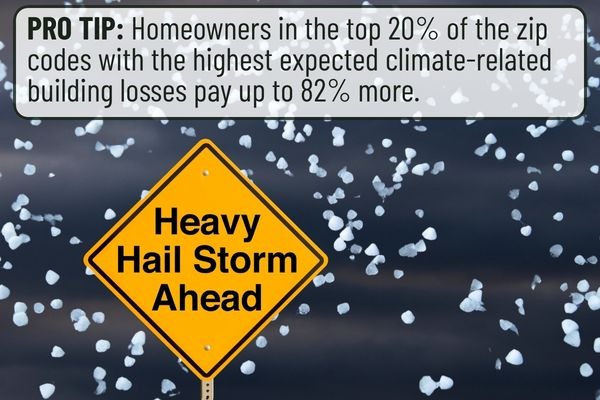
Homeowners in the top 20% of zip codes with the highest expected climate-related building losses, including wildfires, hurricanes, earthquakes, tornadoes, and hailstorms, paid 82% more than homeowners in the 20% of zip codes with the lowest risk, according to US Department of Treasury data. That’s because claims in high-risk areas were both more frequent and more expensive.
Supplemental Coverage or Additional Policies
While living in a high-risk area can increase regular home insurance premiums, you may also pay more if you move to a high-risk area that requires additional insurance for floods or earthquakes.
These hazards aren’t typically covered under a standard home insurance policy. If you settle in an area not prone to these hazards, you may not need this coverage, which could lower your overall insurance costs.
Auto Insurance
Every state (plus Washington, D.C.) except New Hampshire requires drivers to carry auto liability insurance. Your auto insurance rates may change, for better or worse, if you move to a different state for a variety of reasons, even if your driving record, driving habits, and vehicle haven’t changed.
Auto insurance premiums are determined by a variety of factors, including:
Coverage levels and types of coverage required by your state: States requiring insurance require liability coverage, but the amount of coverage may vary. Additionally, some states require Personal Injury Protection (PIP) or medical payments coverage. Higher coverage levels and additional required coverage can drive up rates for that state.
Uninsured / underinsured drivers: Some states require drivers to carry uninsured / underinsured driver coverage, which can increase the cost of coverage. Additionally, states with high percentages of uninsured motorists may also have higher insurance rates. On the other hand, Maine and Idaho have low percentages of uninsured drivers (5.7% and 6.2%, respectively, as of 2023) and also have some of the lowest car insurance rates in the country, based on data reported by US News and World Report.
Medical and legal costs of claims: The cost of claims in a respective state could lead to lower or higher insurance rates.
Weather and theft risks: States, and even regions or zip codes, prone to weather hazards and theft may have higher insurance rates.
Traffic and Population Density: If you move to an area with less traffic and fewer accidents, premiums might fall.
There are also personal factors that can affect your auto insurance quotes, specifically, depending on how your living situation changes when you move to a new state.
Driving Frequency: If your commute or other factors increase your annual mileage dramatically, your insurance premiums may rise after a move. If you relocate to a highly walkable area, you could qualify for low-mileage driver discounts.
Vehicle Storage: If you move to a house where you can keep your car in a garage year-round, you may see a decrease in insurance premiums because you’re reducing the risks of theft and damage from natural disasters.
Health Insurance
When you move to a new state, your health insurance costs may change depending. It depends on the type of plan you have and if your employment situation has also changed.
ACA Marketplace Plans
If you write health insurance through the ACA Marketplace, your plan isn’t transferable to a different state. You’ll need to log into your Marketplace account and apply for a new plan in your new state.
Premiums may increase or decrease. Insurance companies can use five factors to determine rates, with one being your location. Insurance company competition, state and local rules and the cost-of-living in your region can affect premiums.
Employer-sponsored Plans
If you move out of state but remain with the same employer, your health insurance rates might stay the same. But you could have a problem finding providers in your new location, which could mean switching to a different plan. That, in turn, can affect your health insurance costs.
Similarly, if your employer offers different plans in different regions, your premiums might change.
If your move also means a new job, your health insurance coverage and rates are highly likely to change. While you may not be able to negotiate your portion of premium contributions to the plan, you may be able to negotiate a higher base salary or other benefits and perks to make up the difference in health insurance costs at your new job.
Other Insurance and Benefits
A growing number of states, plus Washington D.C., now require most employers to provide paid family and medical leave insurance. In some states, employers and employees split the cost of these premiums.
If your move leads to working in a state that requires your employer to provide these benefits, you should be prepared for payroll deductions that cover your portion of the premium.
Conclusion
In general, moving to a new state won’t automatically lower or raise your home, auto or health insurance rates. But the state where you live plays a role in determining these insurance premiums. It’s important to factor insurance costs, including initial payments for new policies, into your overall moving budget.
You can shop around for quotes before you move so you’ll be prepared for changes.
https://www.lemonade.com/homeowners/explained/homeowners-vs-renters-insurance
https://home.treasury.gov/news/press-releases/jy2791
https://www.census.gov/library/stories/2025/06/property-insurance.html
https://www.usnews.com/insurance/auto/uninsured-driver-crisis-milestone
https://www.usnews.com/insurance/auto/cheapest-states-for-car-insurance
https://www.healthcare.gov/reporting-changes/when-you-move
https://www.healthcare.gov/how-plans-set-your-premiums