With insurance premiums rising, savvy homeowners are looking for ways to reduce costs on home insurance. Smart-home devices can save up to 20% off the cost of your insurance premiums while adding convenience to your home and giving you extra peace-of-mind.
Which smart-home devices yield the greatest home insurance savings? And which ones won’t shave money off your home insurance bill?
What Is a Smart Home?
The definition of a smart home varies widely depending on budget, connectivity, and just how much technology you want to incorporate into your life.
Some families start with the basics, like smart light switches that connect to an Amazon Alexa or Google Home device. This, alone, can turn your house into a smart home, but it may not lower your home insurance costs.
On the other end of the spectrum, high-value homes may come equipped with professionally installed smart home control systems that help automate and optimize the occupants’ lives. If these are connected to a monitored security system, they can save money on home insurance.
But you don’t need to spend thousands on a high-end smart home system to save money on home insurance. Smart-home devices at many price points can deliver savings of 1% up to 20%, and you can stack the discounts depending on the devices you have connected to your home.
Smart-Home Devices and the Secret to Insurance Savings
Devices that increase your home’s security or emergency response times in case of a flood, fire or theft can lower home insurance rates.
But there’s a key point to understand: to maximize your savings, these systems typically must be professionally monitored.
For instance, a Ring (or similar) doorbell camera can increase your home’s security by preventing (or catching) porch pirates stealing packages. It can also help prevent break-ins and vandalism by making it appear as if someone is home when you aren’t.
But unless you have your doorbell video camera hooked up to a security system that is professionally monitored, you’re not likely to get an insurance discount just for having it.
Likewise, a keyless entry electronic lock that connects to the internet can improve your home’s security, allowing you to control and monitor access even when you aren’t home. But, in most cases, it must be hooked up to a monitored home security system to yield insurance discounts.
Let’s explore some of the best ways to save money on your home insurance through smart home upgrades.
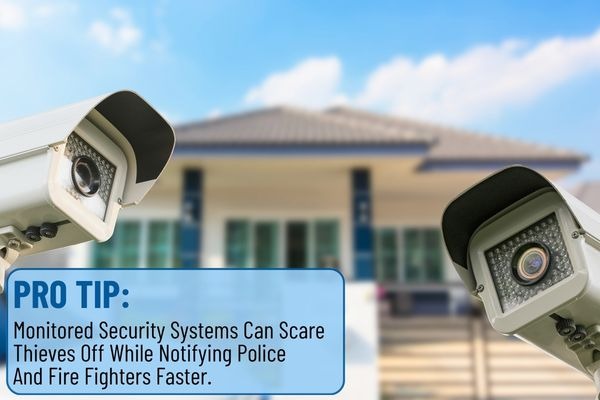
Monitored Security Systems
Monitored smart security systems like those from SimpliSafe and ADT may yield home insurance savings of up to 20% depending on your provider. Systems that automatically contact a central alarm station and can also notify police during a break-in are more likely to receive discounts.
Most home security systems include window and door sensors. Adding more components to your system may increase your home insurance discounts.
Video Doorbells and Outdoor Cameras
You might get a small discount on home insurance for having a smart video doorbell or outdoor security cameras like those from Ring or Reolink. You’re more likely to see savings if the system is connected to a central, monitored home security system and if your camera also saves and stores footage, either locally or in the cloud, for review.
Camera footage can be useful for home insurance companies to review liability claims, such as slips and falls, for fraud or view what happened during a theft.
You might also get additional savings if your video doorbell delivers push notifications to your mobile device, allowing you to keep tabs on what’s going when you’re away from home.
Every additional feature on your home security monitoring system may increase your savings, so it makes sense to build a robust system with multiple levels of protection.
Smart Locks
As with a video doorbell, if your smart locks connect with your home security system, you may get an insurance discount. Strong deadbolts may also yield additional savings.
Monitored Smoke and Fire Alarms
The 2025 California wildfires cost insurance companies $40 billion. Fires account for roughly 7% of insured losses globally, according to the United Nations Office for Disaster Risk Reduction (UNDRR). Anything you can do to protect your home from fires is likely to lower your home insurance rates.
Monitored smoke and fire alarms, which send alerts to first responders at the first signs of smoke or flames, can yield savings of 5% to 20% from some insurance carriers.
Water Leak Sensors with Automatic Alerts and Shut Off
Smart water leak sensors that alert you via an app or text to your mobile device can help prevent water damage, another major cause of insurance claims. If your water leak sensors automatically shut off the water, even if you aren’t home, can get bigger discounts than systems that just alert you to a problem.
Smart Thermostats
While most people install smart thermostats to keep their home comfortable and reduce energy bills, you might be surprised to learn that smart thermostats may deliver savings of 1% to 3% on your home insurance.
The reason? A smart thermostat that keeps your home warm enough that your pipes won’t freeze while you’re away can prevent burst pipes and water damage.
Generators
High-value homes may save money with a permanently installed generator. A generator kicks in when power goes off, which means that smart home security systems, fire alarms, water sensors, and HVAC systems keep running during an outage. That reduces the risk of frozen pipes and water damage and keeps your home protected from other perils, including theft and fire.
Chubb may cover up to $2,500 toward the cost of a generator if you’ve filed a water damage claim in the past.
Electrical System Monitoring
A device called Ting can monitor your home’s electrical systems and detect signs of potential fire hazards before an electrical fire starts. Ting also has products designed to detect frozen pipes or freezing pipe risks.
Not only can you snag insurance discounts with a Ting system, but many insurance carriers, including State Farm, Nationwide and Chubb will set you up with a free Ting.
Seek Out Additional Savings
In addition to offering discounts on your insurance bill, some insurance carriers offer free or discounted equipment to keep your home safer and more secure.
Before you purchase and install smart home equipment, ask your insurance carrier about potential discounts, free monitoring, or rebates on devices from specific manufacturers.
How to Get Insurance Discounts for Your Smart Home Upgrades
Getting a home insurance premium discount for smart home upgrades isn’t as easy as just purchasing and installing the devices.
Ask your insurance company what sort of proof they need to see. This might include:
- Purchase receipts
- Proof of professional installation
- A monitoring certificate
Save More by Sharing Data
Some insurance carriers, like State Farm and USAA, may require that you share usage data after installing a monitoring system.
For instance, USAA’s Connected Home program delivers discounts when you install at least two water leak detectors from Roost, First Alert or Honeywell Home and agree to share the data with USAA.
The insurance company also offers deals on equipment from these companies through the USAA Perks program. (Note: Partners may change or USAA may add new partners. Participating companies were accurate at the time of writing.)
The Bottom Line on Smart Homes and Insurance Savings
Monitored home security systems and other smart home devices can be pricey. It’s unlikely that these devices will pay for themselves over time through insurance discounts, alone.
One way to keep your insurance rates low is to avoid filing a claim. If you can spot potential problems before they start, you reduce the odds of a claim, leading to savings over time.
When you combine the energy savings potential of devices like smart lights and thermostats with insurance discounts and the peace-of-mind you’ll have, smart devices pay for themselves in other ways.
The information provided on this website is for general informational and educational purposes only and should not be considered legal, financial, or insurance advice. While we strive to keep content accurate and up to date, insurance laws, policies, and regulations can vary by state and may change over time.
Nothing on this site constitutes professional advice or a recommendation of any specific insurance product, provider, or strategy. You should consult with a licensed insurance agent, financial advisor, or legal professional regarding your individual situation before making any decisions.
Sources:
https://www.nerdwallet.com/insurance/homeowners/learn/smart-home-insurance-discount
https://www.thezebra.com/resources/home/smart-home-insurance-savings
https://www.amfam.com/insurance/home/smart-home/energy-efficiency
https://money.com/video-doorbells-and-insurance-savings
https://iprotectinsurance.com/smart-home-tech-unlocking-insurance-discounts
https://simplisafe.com/security
https://iprotectinsurance.com/home-security-systems-how-they-can-earn-you-insurance-discounts
https://reolink.com/blog/can-security-cameras-reduce-insurance-premiums
https://www.usaa.com/support/insurance/homeowners/connected-home