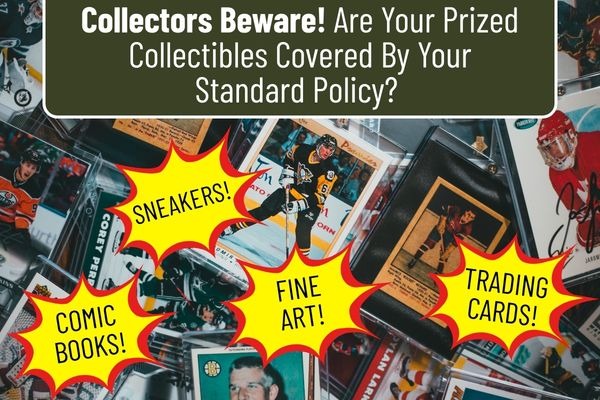
Most people carry homeowners, condo, or renters insurance to replace their personal property in case of a covered event, such as fire or theft. But if you have fine art, trading cards, expensive sneakers or other high-value collectibles, these pricey items may not be covered by your standard policy.
You have options when it comes to insuring your high-value collectibles. The type of policy and coverage levels you choose depend upon the value of your items and the type of protection you want.
Know Your Coverage Limits
Before you rush out to buy additional insurance for your high-value items, review your current home, condo, or renters policy.
Typical home insurance policies cover your personal property for up to 50% to 70% of your dwelling coverage, while renters policies may cover anywhere from $10,000 to $500,000 in personal property, according to insurance carrier Amica. Condo insurance may also cover up to $500,000 for personal property, but these policies vary widely, too.
As an example, if your dwelling coverage limit, or the amount the insurance company will pay to repair or rebuild your home, is $500,000 and your personal property coverage is 50% of that, your personal belongings are covered for up to $250,000.
However, there are often specific sub-limits for high-value items, including jewelry and collectibles. Insurance companies may only pay out $1,500 for individual items.
Depending on the type, size, and value of your collection, you need to decide if you should purchase a rider or buy a separate policy.
Homeowners or Renters Insurance Riders for High-Value Items
If your high-value collection is valued at less than roughly $15,000, you may opt for “scheduled personal property coverage,” which is purchased as an add-on to your home insurance policy. You’ll need to have each item appraised to show its value before you can add it.
This type of rider may also be called a personal property floater or an “endorsement,” according to the Insurance Information Institute.
You can use this endorsement or scheduled personal property coverage to insure:
- Jewelry
- High-value home electronics like computers
- Fine art
- Numismatics (coin collections)
- Antique furniture
- Trading cards
- Sports memorabilia
- High-value sneakers
- Luxury handbags and other fashion accessories
- Other collectibles
If you opt for an endorsement, be sure your policy covers replacement value or agreed value, so you’ll receive what the item is worth today, especially if it has appreciated.
Separate Policies for Your Collectibles, Including Fine Art
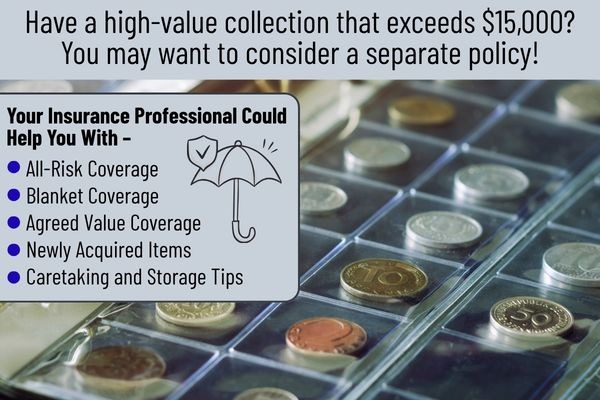
If you have a high-value collection that exceeds $15,000, you may want to consider a separate policy.
Taking out a separate policy has several benefits for those with ultra-high-value collections.
All-Risk Coverage: Dedicated policies often extend coverage beyond the typical hazards covered by home insurance to include accidental loss or mysterious disappearance, earthquake or flood damage, or damage during transit or caused by people in the household.
Blanket Coverage: You can opt for coverage of your entire collection, or you can insure individual pieces separately. In some cases, you may not require an appraisal for individual items under a blanket policy. For instance, Chubb only requires appraisals for individual fine art items exceeding $499,999 in value or collectibles worth $100,000 or more.
Agreed Value Coverage: Many policies cover 100% of the agreed value of collectibles and fine art.
Newly Acquired Items: When you add a new item to your collection, it’s important to notify your insurance broker to make sure they add the item to your policy. But, if an item is brand-new and hasn’t yet been appraised or valued, some specialty policies will pay up to 25% of your itemized coverage if you file a claim for that item.
Caretaking and Storage Tips: Working with professional brokers well-versed in high-value collections can protect your items in many ways. Specialty brokers can offer tips and guidance on storage and preservation.
If you’ve recently inherited a fine art collection, for instance, or if you’re new to the hobby and aren’t sure how to display pieces while preserving their value, your broker can help. Some collections require specific environments, humidity levels, and even protection from sunlight to preserve not just their appearance, but their cash value.
Where Can You Purchase Insurance for Your Collectibles?
Some providers of collectibles insurance range from mass-market insurance carriers like Allstate, GEICO and USAA to companies that specialize in insuring high-net-worth and ultra-high-net-worth (HNW) clients.
These specialty HNW carriers include:
- HUB Private Client
- Chubb
- BerkleyOne
- Lockton
These carriers often provide specialty solutions for your insurance needs. Let’s take a look at specialized insurance for items like sneakers, trading cards, and fine art.
Sneakers
Some folks who invest in sneakers also have a side gig or full-time business buying and reselling sneakers. But some “sneakerheads,” as they’re called do it for their love of sneakers, whether they’re passionate about retro designs, limited edition drops, or just the style of specific brands.
It’s important that sneaker insurance covers your prized possessions whether they’re at home in a storage or display case, on your feet, or in transit to a buyer.
Experts observe that the sneaker reselling market is no longer as robust as it was earlier this decade. “A few years ago, limited edition shoes were reselling on the aftermarket for 100% to 200% of a premium. Nowadays, that’s not the case,” Business of Fashion sports and fashion expert Mike Sykes II told NPR.
But you still want to protect your collection at its current value. And if the market rises again, you’ll want to reassess your collection to adjust the agreed value so you don’t lose money if you have to file a claim.
If you’re a reseller, you might consider a specialty insurer like SoleSafe, a division of collectibles insurance company Vertical Insure. SoleSafe covers your collection and inventory in the event of:
- Fire
- Mold
- Accidental Damage
- Theft
- Pet damage
- Flooding (in non-flood zones)
This insurance also protects sneakers in transit, whether they’re in checked baggage and lost or damaged, or during shipping.
For sneakerheads who don’t regularly sell their sneakers, consider an endorsement to your personal property protection or a separate policy designed for fashion collections.
Trading Cards
Trading cards, sports memorabilia, and pop culture collectibles are growing in popularity.
Globally, the collectibles industry is set to exceed $484.6 billion by 2034, according to The Collectibles Industry Report published by Market Decipher. Sports memorabilia sales, alone, reached $33.6 billion in 2024, according to another report by Market Decipher. (This is the most recent year for which data is available.)
Trading cards include sports cards, Pokemon cards, Magic the Gathering, and many others.
When you’re shopping for a dedicated policy for your trading card or pop culture collection, look for a company that understands the value of your collectibles and how to preserve them. Look for flexible coverage with a choice of a blanket policy or the ability to ensure individual items separately.
Fine Art
Many specialty brokers deal in writing fine art policies. When you purchase fine art insurance, make sure to confirm what type of art is covered and decided whether a scheduled policy or blanket policy is the best option for your collection.
Specialty insurance agencies can insure private art collections and help you understand the best practices of storing or displaying your treasured pieces.
Tips to Help If You Have to File a Claim
Keeping careful records of your collections, including photos, original receipts, and appraisal documentation can help if you have to file a claim. Make sure to keep copies of these records and store them in a location separate from your collection and/or in digital files in the cloud. That way, if a catastrophic loss occurs on your property, you can access the documentation to file an accurate claim.
Make sure to care for your items properly to avoid having a claim denied. Your broker may be able to offer tips on the best ways to store certain collectibles, fine art, and heirloom items.
If you intend to pass down your collection to future generations, include current insurance documentation, appraisals and other details about the care and protection of your collection. Make sure your heir receives all the guidance and paperwork they need to enjoy, preserve, and insure these items after you’re gone.
Conclusion
Sneakers, trading cards, fine art, and jewelry may all require specialized insurance coverage beyond your homeowners, condo, or renters insurance policy. Finding a company with flexible, robust plans to protect your collection from any contingency is important.
Collections are not just something you enjoy today; they represent a legacy you can pass on and use to preserve and build generational wealth.
The information provided on this website is for general informational and educational purposes only and should not be considered legal, financial, or insurance advice. While we strive to keep content accurate and up to date, insurance laws, policies, and regulations can vary by state and may change over time.
Nothing on this site constitutes professional advice or a recommendation of any specific insurance product, provider, or strategy. You should consult with a licensed insurance agent, financial advisor, or legal professional regarding your individual situation before making any decisions.
Sources:
https://www.geico.com/living/personal-property-coverage
https://www.amica.com/resources/renters/personal-property-claim
https://www.iii.org/article/how-much-homeowners-insurance-do-i-need
https://www.allstate.com/collectibles-insurance
https://www.chubb.com/us-en/individuals-families/products/valuables/arts.html
https://www.chubb.com/us-en/individuals-families/resources/guide-to-high-value-art-insurance.html
https://www.chubb.com/us-en/individuals-families/products/valuables/your-collections.html
https://www.huntingtontblock.com/Coverages/Fine-Art-Insurance