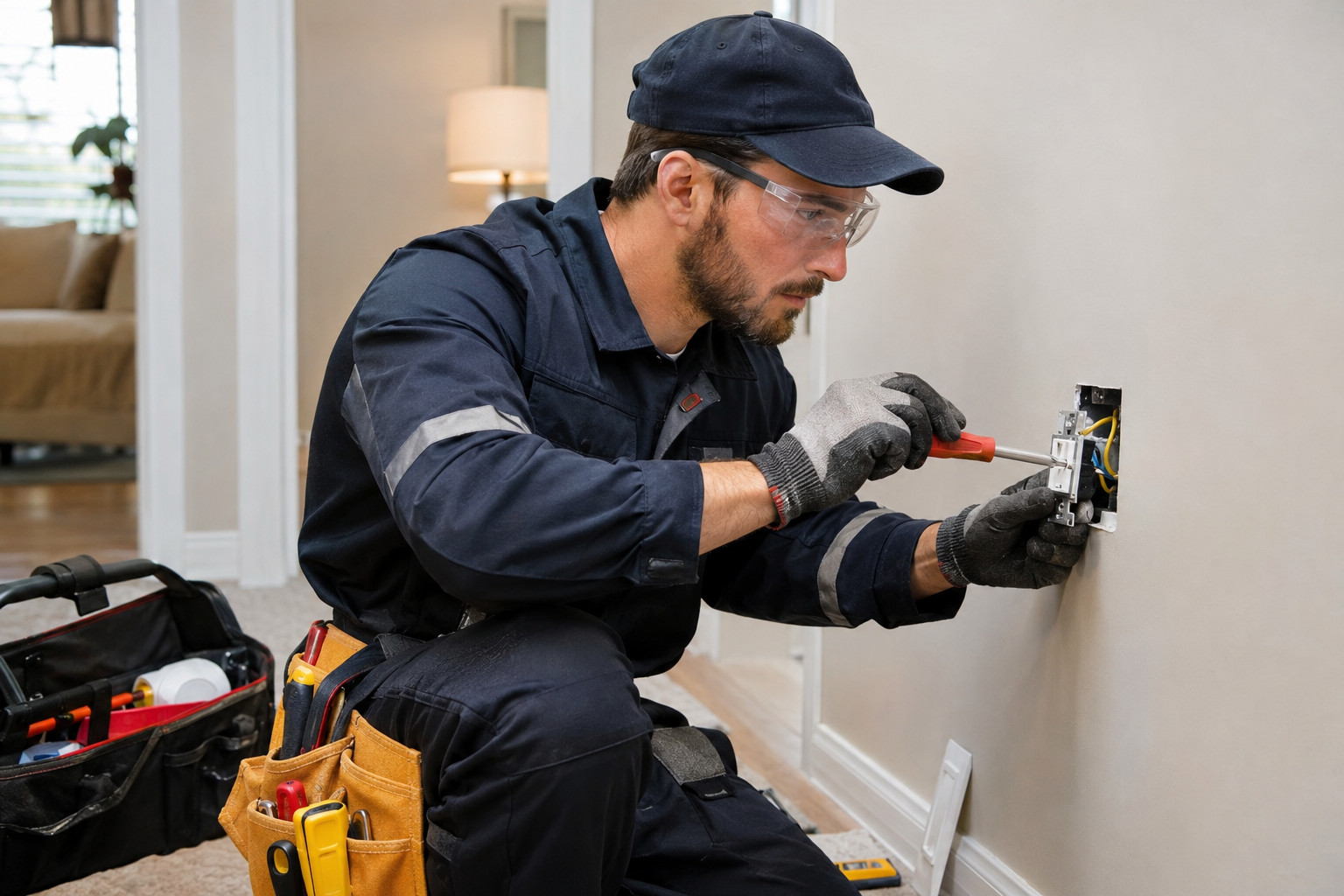
If you work in the construction or building trades industries, including plumbing, electrical, general contracting or construction, you may hire subcontractors to help get the job done. But these independent contractors aren’t automatically covered by your company’s general liability insurance. That can lead to problems if you get sued by a client or if one of your contractors gets injured on the job.
Understanding what insurance is required for all workers on a job site is an important part of risk management. After all, if something happens, it’s your business, assets, and even your livelihood on the line. Compliance is also important, since clients, property managers, and even cities or municipalities may require that building trades professionals carry specific insurance before starting a job.
Independent Contractors vs. Subcontractors vs. W-2 Employees: What You Need to Know for Compliance
Independent contractors can be an important part of a contracting business, enabling you to scale up quickly and easily for big projects without any commitments when the project ends. Working with independent contractors may also allow you to reach regions you don’t normally serve. You can hire local labor rather than paying to transport and house full-time employees close to the job site.
If you’re a GC, working with subcontractors who specialize in trades like plumbing and electrical may be crucial if you don’t have these type of professionals on staff.
A subcontractor can be defined as an individual worker or a company with employees of its own.
If you’re working with individual 1099 independent contractors, they have different rules when it comes to pay and insurance. Contractors:
- Are responsible for their own payroll taxes, including Social Security and Medicare
- Don’t qualify for unemployment when their contract ends
- Don’t qualify for disability or Paid Family and Medical Leave through the employer, even in states where it’s mandated for employees
- Aren’t covered under the employer’s workers’ compensation coverage
- Aren’t covered under the employer’s business general liability insurance or E&O policy
This leaves business owners with several risk gaps when they subcontract other businesses or use 1099 independent contractors for a project.
Your Coverage May Not Be Enough – But It’s a Start
Fortunately, there are ways to ensure the right coverage to protect the business owner from being held liable for a contractor’s actions, inactions, or negligence.
Here are some of the coverage general contractors need, whether or not they hire subcontractors:
General Liability Coverage
General liability insurance covers your business for claims related to:
- Bodily injury
- Personal injury
- Medical costs
- Property damage
It also covers things like slander, libel, claims of false advertising, copyright infringement (intellectual property protection) and more.
Example #1: If someone who doesn’t work for you gets hurt on a jobsite and claims it’s your company’s fault, you could get sued. Your liability coverage could help pay for the legal fees or settlements, along with payments like medical bills and loss-of-work.
Example #2: If you’re an electrical contractor and you or one of your workers causes a fire on your client’s property, your general liability coverage should pay for the damage.
But here’s the problem with hiring subcontractors or independent contractors: In either of the examples above, if someone who is not a W-2 employee of your business is responsible for the injury or property damage, your general liability insurance won’t cover the claim.
If other problems like false advertising claims or issues with the work after it’s completed arise, your business also isn’t covered if a contractor was responsible.

Professional Liability (Errors & Omissions)
Professional liability (errors & omissions) insurance protects your company against financial losses related to professional negligence, oversights, or design flaws. While general liability protects against claims of property damage, E&O would cover legal expenses, settlements and judgements, and other costs if you’re sued for:
- Flawed or defective work
- Design or planning mistakes
- Paperwork errors that delay the project, cost extra money, or lead to incorrect or incomplete work
As with general liability coverage, most E&O policies don’t cover subcontractors or independent contractors unless they’re listed as an added insured.
Business Owner’s Policy
A Business Owner’s Policy (BOP) combines commercial property insurance with general liability coverage and E&O insurance.
It’s a popular type of policy for general contractors and building trades professionals because it covers your office for claims related to fire, smoke, vandalism, theft, and similar damage, along with providing general liability coverage and protection
In spite of its expanded coverage range, a BOP also doesn’t cover independent contractors or general contractors.
How to Bridge the Coverage Gap
A general contractor may be able to add an independent contractor to their BOP, E&O or general liability policy as an “additional insured” through an endorsement. But that may increase premium rates. It also puts the liability on the business owner’s policy rather than on the 1099 contractor or the subcontractor.
Having a subcontractor as an “added insured” is better than having uninsured workers on a job site or dealing with your clients. But it’s not ideal.
Instead, before hiring a subcontractor or independent contractor in the construction trades, make sure they have their own general liability plus E&O or BOP insurance. Then, if an issue occurs where the contractor may be at fault, their policy will be the primary coverage. Your coverage, as the general contractor, is secondary coverage.
Compliance Matters: Get It in Writing
As the GC in a project, you can (and should) require proof of insurance coverage before working with an independent contractor or a subcontractor. You can also specify the amount of coverage they have to carry.
The subcontractor should be able to show a Certificate of Insurance (COI) with the general contracting company named as an additional insured.
The GC or business owner should also include an indemnity agreement in the contract. Most indemnity clauses place the burden on the 1099 contractor and hold the business owner harmless in the event of a lawsuit initiated by a third party. The independent contractor would have to pay legal fees and, if found guilty, other costs. It’s smart to speak to a lawyer specializing in small business contracts to create a contract that works in your favor.
Additional Insurance Subcontractors Should Carry
If you hire subcontractors, you might also need other types of insurance. But there are certain forms of insurance subcontractors can, and should, carry for themselves and/or provide for their own employees.
Workers Compensation: The Subcontractor’s Responsibility
If a contractor is injured and you’re not at fault, the contractor should have worker’s compensation coverage of their own in place to cover their medical bills and provide partial income replacement. In most states, worker’s compensation covers two-third of a worker’s gross average weekly wage. There may be state minimums and maximum benefit amounts, depending on the state.
It’s not a GC’s responsibility to provide worker’s compensation coverage for anyone who isn’t a W-2 employee of their company. Subcontractors must provide worker’s comp for any of their own employees.
Disability Insurance or Paid Family and Medical Leave: The Subcontractor’s Responsibility
In states where it’s required by law, business owners must provide temporary disability insurance or paid family and medical leave to eligible full- or part-time employees. But these mandates don’t apply to independent contractors. Independent contractors don’t receive any employee benefits from their clients, because they aren’t employees.
If a subcontractor hires W-2 employees, it’s the subcontractor’s responsibility to provide the mandated benefits, in compliance with state laws.
In some states, 1099 workers can take out their own PFML policy. Short-term disability, long-term disability, and individual disability income (IDI) benefits are available as individual benefits for contractors across the US, typically underwritten by major insurance companies.
Conclusion
Before accepting a contract, a GC should understand the insurance required for compliance. It’s the GC’s responsibility to make sure any subcontractors or independent contractors carry the necessary insurance, with the GC listed as an added insured.
Being proactive about insurance compliance can help avoid hassles, fines, and even expensive lawsuits down the line.
Sources:
https://www.njm.com/small-business/does-my-business-insurance-cover-independent-contractors
https://www.thehartford.com/workers-compensation-landing-page?
https://www.thehartford.com/general-liability-insurance/independent-contractor