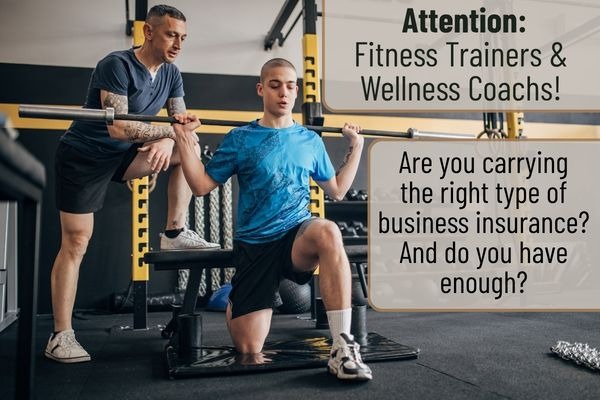
Most business owners and self-employed individuals should carry insurance to protect their financial interests, professional reputation, and their business property. Fitness trainers and wellness coaches face specific risks that professionals in some other occupations may not have to consider. If you’re a fitness trainer or wellness coach, it’s important for you to carry several types of business insurance, including professional liability, to cover yourself and your business in various contingencies.
Professional Liability Insurance (Errors & Omissions)
Professional liability insurance, sometimes called Errors & Omissions insurance, covers circumstances when a client believes your action or inaction harmed them or did not deliver the results they expected. It can cover claims that a coach or trainer:
- Didn’t fulfill their contract.
- Was negligent.
- Offered advice or guidance that caused physical or emotional harm.
- Failed to deliver promised results.
Most conflicts can be avoided or settled through straightforward communication. Wellness professionals should never make claims that their clients will lose a certain amount of weight or achieve specific results.
Trainers and coaches should fulfill contracts regarding the duration and frequency of sessions. And they should ensure that their guidance is, to the best of their knowledge, safe, healthy, and in the best interests of clients.
But following these best practices doesn’t guarantee frictionless relationships with clients. Miscommunications happen. A client might think you can help them lose 30 pounds if they follow your advice. If they fall short of their goal, even if you never claimed they would reach it, they might decide to sue.
Even though you can prove you never promised specific results, you’d still have to hire a lawyer and appear in court. Liability insurance may cover those costs.
Liability insurance also extends beyond contracts and expectations. Fitness trainers and wellness coaches offer physical training and/or health guidance and advice. If a client claims they became ill or injured following a coach or trainer’s guidance or completing assigned exercises, the coach or trainer could be held financially liable. Insurance can help cover legal costs and any settlements or judgements, including payments for the client’s medical costs, loss-of-work, and pain and suffering.
Trainers who work in gyms or fitness centers may be required to carry liability insurance with the facility listed as an “additional insured.”
Professional Liability Insurance vs. Malpractice Insurance
While fitness trainers can, and often do, hold certifications from accredited organizations like the National Academy of Sports Medicine (NASM), American Council on Exercise (ACE) the National Strength and Conditioning Association (NSCA) or the American College of Sports Medicine (ACSM), these credentials aren’t necessarily required. There are no state licensing requirements for trainers.
Health and wellness coaches also have certification programs, but these may not be as well known.
In short, neither profession has state regulations governing who can call themselves a trainer or coach.
Malpractice insurance is only available to licensed medical professionals, including doctors, nurses and dentists. It covers personal injury, damages, medical board actions, and situations related to healthcare regulations.
Liability policies for coaches and trainers should cover financial losses and personal injury. Similar to malpractice insurance, if a client claims they suffered bodily harm, injury, or illness as a result of your guidance, liability insurance can cover their medical costs, loss-of-work, and pain and suffering. That’s what makes these policies different from the E&O insurance a professional like a lawyer, real estate agent, or journalist should carry.
Other Types of Insurance for Fitness Trainers and Wellness Coaches
In addition to liability coverage, trainers and coaches should also carry other types of business insurance to protect their financial interests.
General Liability
General liability insurance covers bodily injury and personal property claims that happen in person.
For instance, if you’re a trainer and a client is injured on a piece of exercise equipment you own, the general liability policy should cover their claim.
Likewise, if a client breaks an expensive piece of training equipment that belongs to the gym or fitness facility where you work, that loss should also be covered by general liability.
Wellness coaches who don’t see clients in person may not need general liability / personal property protection.

Cyber Insurance
Health and fitness coaches and trainers should also carry cyber liability coverage. Even if you mostly see clients in person, you probably store their personal information, including payment data, digitally.
If your clients’ personal data is compromised in a data breach, you could be held responsible. Cyber liability insurance can cover related costs, including:
- Legal representation
- Settlements
- Credit monitoring for affected customers
Keep in mind that if the leaked information results in accusations of HIPAA violation, you may need a rider or a separate policy that may cover your legal costs.
You may also consider cyber insurance to cover any loss of business and financial losses resulting from a cyber attack.
A comprehensive cyber insurance policy should cover:
- Business interruption
- Extortion or ransomware attacks
- Data recovery following an attack
Business Owners Policy (BOP)
Fitness trainers and wellness coaches may also want to consider a business owners policy, or BOP. This covers your own equipment, including computers and workout equipment, if it’s lost, damaged, or stolen.
A BOP combines general liability with commercial property insurance and business interruption coverage. If your business has to close due to property damage, business interruption or business income coverage can help replace your income and potentially also cover operating expenses until your business is running again.
A BOP is especially important if you operate in your own facility or a space you lease, since it can cover your expensive equipment and the building in the event of damage or theft.
Workers’ Compensation / Disability Coverage
If you have W-2 employees, you need to provide workers’ compensation coverage in case they suffer a work-related illness or injury.
If you operate as a sole proprietor, LLC, or a corporation where you’re the only employee, you can voluntarily elect to carry workers’ compensation to partially replace your income in the event of an injury or illness incurred on the job.
You may also want to purchase short-term and long-term disability insurance (disability income insurance) with “own occupation” coverage for yourself, in case you become injured or sick off-the-job and you’re unable to work in your chosen field.
Why Coverage Through a Gym or Fitness Facility Where You Operate Is Not Enough
Gyms and fitness centers carry their own business insurance policies. But this insurance protects their interests and may not cover you and your business.
Many fitness facilities won’t hire a trainer or coach unless they have their own professional liability coverage, with the facility named as an additional insured.
Insurance for Coaches: Costs and Choosing a Policy
This article provides an overview of the types of insurance you should consider. Your coverage levels and specific types of insurance you need depend on your company and the services you offer.
Higher coverage limits, obviously, cost more. Just as with other types of insurance, you can reduce premium costs by reducing coverage levels or increasing your deductible.
You might be surprised to find that a professional liability policy is relatively affordable for the protection it provides. A basic policy often ranges from $150 to $400 per year, according to the Functional Medicine Coaching Academy Inc.
Before choosing a policy or multiple policies, consider:
- The types of coverage you need
- Whether you see clients virtually, in their home, in a gym, or in your own studio
- Whether you drive to see clients
- If you have employees
- Your budget and risk tolerance
These factors affect the type and amount of insurance to purchase.
Conclusion
Wellness coaches and personal trainers require specialized insurance. Shop online for coverage or speak to a broker who can customize a policy or bundle policies to provide the coverage you need.
The information provided on this website is for general informational and educational purposes only and should not be considered legal, financial, or insurance advice. While we strive to keep content accurate and up to date, insurance laws, policies, and regulations can vary by state and may change over time.
Nothing on this site constitutes professional advice or a recommendation of any specific insurance product, provider, or strategy. You should consult with a licensed insurance agent, financial advisor, or legal professional regarding your individual situation before making any decisions.
Sources:
https://www.geico.com/business-insurance/professions/personal-trainer-insurance
https://www.nasm.org/resources/insurance
https://www.geico.com/wellness-and-fitness-insurance
https://www.worldinsurance.com/blog/does-my-gym-provide-adequate-fitness-instructor-insurance-for-me
https://functionalmedicinecoaching.org/blog/liability-insurance
https://www.getindigo.com/blog/professional-liability-insurance-vs-medical-malpractice-insurance