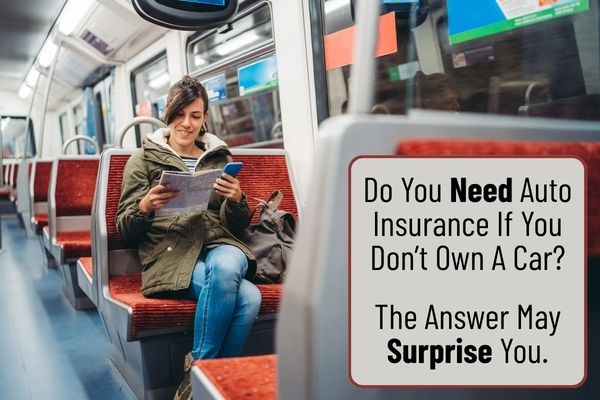
When you sold your car and moved to the city, you not only got rid of your car payment, but you no longer have to pay for auto insurance, gas, or maintenance. Chances are you are fine without a car since you have the train and rideshare apps at your disposal. But what if you rent a car for a beach vacation or your buddy needs you to drive his truck during a move? If you got into an accident or pulled over by the police, what would happen?
You may not own a vehicle but you are still at risk when you operate one since you’re still liable for damages and injuries that occur, and most states require you to have insurance to drive.
Read on to learn why you need auto insurance if you don’t have a car, who needs non-owner car insurance, scenarios where you’ll need it, and four unconventional ways to insure yourself without buying traditional auto insurance.
Why Buy Auto Insurance If You Don’t Have a Car
If you’re driving a vehicle with the owner’s consent, their insurance will pay for injuries or property damage. Yet, you could still be at risk when driving a borrowed vehicle. Some drivers only have their states minimum amount of liability coverage, which could run out quickly if there are serious injuries, you hit an expensive vehicle, or crash into a home or building. When the claims are higher than their policy limits, you could be held liable for the amount that exceeds their coverage.
The owner of the vehicle is also at risk if you have an accident. An at-fault accident will be reported to their insurance company, even if they’re not driving. In my experience, claims against someone’s vehicle often leads to increased premiums for many years.
Not having continuous insurance coverage can also work against you. Insurance companies don’t like to see gaps in coverage. So, when the time comes to purchase a vehicle, you may be paying higher rates since you haven’t had auto insurance for a while. I’ve had auto insurance since the day I got my license, even though I didn’t have my own vehicle right away. Having a non-owner insurance policy avoids that gap in your insurance that can lead to higher rates later on.
What is Non Owner Car Insurance?
Non-owner car insurance is similar to liability coverage, but it isn’t tied to a specific vehicle. If you cause an accident while driving a vehicle you don’t own, your insurance company pays for the injuries and property damage you cause. For additional protection, some carriers offer add-ons like med-pay/PIP and UM/UIM coverage.
While a non-owner policy covers injuries and damage to other vehicles, it does not cover the vehicle you are driving or your belongings. If you’re driving a rental car, it doesn’t cover claims for a loss of use by the rental company. Driving for hire, like Uber rideshare or GrubHub deliveries, is not covered under non-owner car insurance either. You’ll need to buy separate coverage for that.
If you’re driving someone else’s vehicle, their insurance will always pay first. Your non-owner policy would then become secondary coverage against larger claims or when policy limits are exceeded.
Non-owner car insurance is relatively cheap. Insurify states that it averages $46 a month, which is about 37% less than just having a liability policy. If you own a vehicle or have one readily available at your home, most carriers will not offer you non-owner coverage. Instead, you should be listed on that vehicle’s policy as a primary or secondary driver.
Who Needs Non Owner Car Insurance?
These are some people that can benefit from having a non-owner policy.
- Live in the city. If you depend on public transportation you may not need a vehicle every day. But you’ll still need coverage if you rent one for vacations or running errands.
- College student. Many students choose to not bring their vehicle to school, yet they may drive their roommates car or rent one as needed. Students often remain on their parents policy as a secondary driver.
- Elderly. If you are senior citizen and no longer drive your own vehicle, you may still want to drive a family members vehicle or rent one occasionally. Having a non-owner policy protects your assets in case of an accident.
- Travelers. If you rent a vehicle multiple times a year, it may be cheaper to buy liability coverage through a non-owner policy instead of paying for rental car coverage through the rental agency.
- No longer own a car. When you’ve sold your vehicle and don’t buy a new one right away, you can maintain continuous coverage with a non-owner policy.
- Need an SR-22. After an at fault accident, some states require you to show proof of insurance. You can obtain this through a non-owner policy.
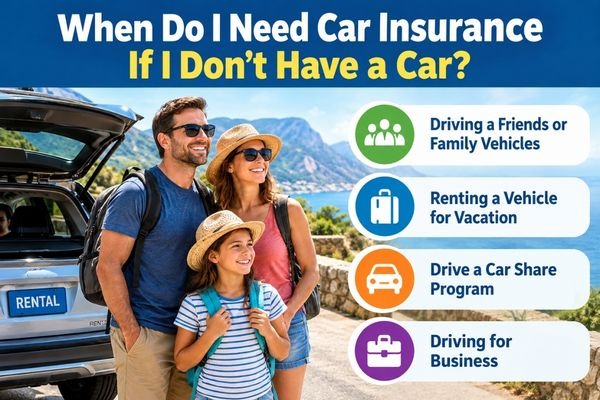
When Do I Need Car Insurance If I Don’t Have a Car?
Here’s how coverage works if you’re driving a vehicle you don’t own.
Driving a Friends or Family Vehicles
When you have permission to drive someone else’s vehicle, their insurance covers you. However, this coverage is only available if you drive their car infrequently. If you borrow the vehicle regularly, you should be added to their policy.
Renting a Vehicle for Vacation
The rental car company wants to know that they’re protected in case you damage their vehicle, injure someone, or crash into someone else’s property. While you can by their daily coverage, it is expensive if you’re renting for more than a couple of days. Credit cards offer some protection, but only for damage to the rental car. It’s best to figure out how to protect yourself and the rental car agency before you arrive at the rental counter.
Drive a Car Share Program
Car share programs such as Zipcar include insurance as part of their service. However, this coverage is often for just the minimum amount of liability required by the state, which can leave you financially exposed if there’s a substantial claim. Zipcar also charges a damage fee of up to $1,000 per occurrence if you damage one of its vehicles and don’t purchase the damage fee waiver.
Driving for Business
If you are given a company car, make sure their commercial policy covers you. Driving for Uber or Lyft is also considered driving for business, and your personal auto insurance may not cover you. Instead, you’ll need to buy a separate policy that’s explained in what Uber drivers often miss with insurance offered by the rideshare company.
Who Will Cover Me When Driving Someone Else’s Vehicle?
The chart below will explain which insurance company will cover you and some things to be aware of.
| Situation | Pays First | Pays Second | Common Gap |
| Borrowed car | Owner’s policy | Your non-owner policy | Owner’s low limits; claim raises their rates |
| Rental car | Your auto or non-owner policy (liability) | Credit card benefit (damage to the car) | Credit cards don’t cover liability or injuries |
| Car-sharing service | Your auto or non-owner policy | The service’s included coverage | State-minimum limits; damage fees |
| Company car | Employer’s commercial policy | Your non-owner policy, if it allows | Business use may be excluded |
| Rideshare or delivery driving | App’s coverage while on a trip | Rideshare endorsement | Personal and non-owner policies exclude it |
How to Get Insurance for Short-Term Driving Needs
There are many ways to insure yourself if you drive infrequently.
Use your Credit Card
Many credit cards cover you against damage to the rental car when you rent a vehicle when you pay for the entire rental with your card and decline the rental companies coverage. This covers the rental car if it’s damaged or stolen and any loss of use charges the rental company may try to bill you for.
However, it doesn’t cover you for liability or any injuries to others. Premium credit cards often provide primary rental car insurance, while most cards’ coverage is secondary, which means that your auto insurance pays first. This coverage typically excluded commercial trucks, box vans, or luxury vehicles. Coverage usually has a time limit of just 15 to 31 days, so be aware of this limit when renting for longer periods. While most destinations are covered, some countries like Australia may be excluded. Read your card’s benefit guide or call customer service to confirm your benefits before booking your rental car.
Purchase from the Rental Company
Loss/damage waiver (LDW) is what most rental companies offer at the counter. This covers the rental vehicle if its damaged or stolen, and the typically rate is about $15 to $30 per day.
Supplemental liability coverage, personal accident insurance, and personal effects coverage are also offered. If you purchase all of these, you could end up paying $40 to $60 a day, which is $280 to $420 per week. That’s quite a bit of money just to have a car. But it could be worthwhile if you don’t have auto insurance and want to protect yourself.
Purchase a Non Owner or Daily Policy
Some companies advertise the option to buy car insurance for a day or week. Yet, most insurance companies only sell policies with coverage periods of 6 to 12 months. If you know you need coverage for a few months, it’s possible to purchase a policy for the time you need, then cancel when you’re done. You’ll receive a pro-rated refund for the remaining months, but those savings may be offset by a cancellation fee. If you rent or drive others vehicles frequently, consider buying a non-owner policy instead.
Stay on your Parents Policy
Unlike health insurance, there isn’t an age limit for staying on your parents’ auto insurance policy. As long as your parents’ home is your primary residence, you can get auto insurance insurance for a college student and remain on their policy. If you move away for college, you could still be considered as living with your parents since your college address is usually temporary. However, when you do move out on your own, regardless of age, you’ll have to buy your own policy.
The Bottom Line
Just because you don’t own a vehicle, that doesn’t mean you shouldn’t have car insurance. Think about how often you drive and choose the type of protection that works best for you. If you occasionally drive a borrowed vehicle or rent a car, you may not need additional coverage. But if you drive rideshare or drive regularly, you should look into non-owner car insurance until you buy your own vehicle. Talk to an agent before your next trip to see what will work for you.
The information provided on this website is for general informational and educational purposes only and should not be considered legal, financial, or insurance advice. While we strive to keep content accurate and up to date, insurance laws, policies, and regulations can vary by state and may change over time.
Nothing on this site constitutes professional advice or a recommendation of any specific insurance product, provider, or strategy. You should consult with a licensed insurance agent, financial advisor, or legal professional regarding your individual situation before making any decisions.
Sources
- GEICO, Understanding Non-Owner Car Insurance: Who Needs It & What It Covers. Published August 31, 2026.
- Insurify, Best Non-Owner Car Insurance: Cost & Coverage (2026). Published October 19, 2026.
- Policygenius, Zipcar insurance: How does it work? Published July 7, 2022.
- CardRatings, What does credit card rental car insurance cover? Published September 24, 2026.
- MoneyGeek, How Much Does Rental Car Insurance Cost? Published August 3, 2026.
- NerdWallet, Temporary Car Insurance: Five Ways to Get Short-Term Coverage. Published April 23, 2024.
- Safeco, How long can I stay on my parents’ car insurance? Published September 14, 2026.