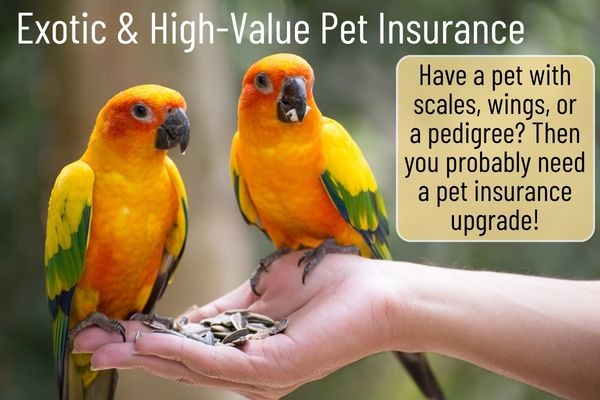
Americans love to own pets. In fact, about 95 million U.S. households own at least one pet. When you think of pets, many immediately think of dogs and cats, yet more and more people want something exotic instead of ordinary. However, if you have a pet with scales, wings, or a pedigree, that usually comes with a higher price tag for checkups, vet care, and prescriptions. While traditional pet insurance covers these costs for dogs and cats, most policies exclude exotic pets or high-value animals. Fortunately, policies tailored to exotic pets and high-value animals can help lower the cost of owning them. Here’s everything you need to know about these policies, including why you need insurance, what it covers, and where to find it.
What Is Considered an Exotic or High Value Pet?
There isn’t a single answer that defines an exotic or high-value pet. It’s kinda like art. You know it when you see it. However, most pet insurance companies consider any animal other than a dog, cat, or horse to fall under exotic pet insurance. Examples of exotic animals include birds, guinea pigs, lizards, rabbits and snakes.
Animals with higher monetary values are considered high-value pets. Their higher value than traditional pets comes from unique traits such as specialized training, breeding value, or other distinctive features. Police dogs and military dogs are considered high-value pets, as are rare breeds and show or breeding dogs and horses. When you own these types of animals, you’re not just insuring a beloved pet but also an asset that can generate income or attract offers to sell.
Why You Need Coverage
These exotic pets and high-value animals require more specialized care than your typical Labrador, so it can be harder to find a qualified veterinarian or more expensive to treat them. Here are some reasons why these animals should be insured.
- Not enough veterinarians that specialize in exotic animals. Few veterinarians specialize in these animals, so finding a specialist can be difficult. A policy that lets you go anywhere you’d like will help you find the right vet for your pet instead of settling for your local vet clinic.
- A mistake can be deadly. Exotic animals can be harmed by their environment and improper nutrition. Their lives can be shortened if you don’t consider these factors. Exotic animals can also mask illness, which can be dangerous when treating them.
- Some animals can make humans sick. Certain species can transmit diseases to humans, such as Salmonella. If you don’t treat your animal properly, it can lead to higher medical bills for you and your family.
- Financial loss. Many of these animals cost a lot of money to buy. If you use them as service or show animals, or for breeding, you could lose a source of income if they get sick or die.
How Many People Own These Animals?
You may be surprised to learn that millions of Americans own exotic and high-value animals. The American Pet Products Association reported that 10 million households own freshwater or saltwater fish, 6 million own birds, 5 million own small animals, and 2 million own horses.
Ownership of pets is roughly divided 50/50 between Gen X and Boomers vs. Gen Z and Millennials. Yet, only 4.27% of 163 million pets in the U.S. are insured. This means that the vast majority of pet owners are on the hook for regular preventative care and unexpected vet bills. If you have an exotic pet or high-value animal, your exposure is even greater.
I’m a big believer in controlling my costs and making expenses more manageable. We have pet insurance for both of our pets. While we don’t have anything exotic, paying for annual wellness checks, shots, and flea and tick medicine can get expensive without pet insurance.
Exotic Pet Insurance Explained
Just like with dog and cat insurance, you’ll pay a monthly premium for exotic pet insurance. When choosing a policy, you may be able to select options that impact how much you pay, such as your deductible, reimbursement percentage, and annual maximum.
Here’s what each of these variables mean, and how they impact what you’ll pay:
- Deductible: How much you’ll pay out of pocket before your policy starts to reimburse you. A higher deductible means that you’re paying more out of pocket before insurance payments start.
- Reimbursement Percentage: How much your carrier will reimburse you after meeting your deductible. Percentages usually range from 50% to 90%. The higher the reimbursement percentage, the more you’ll pay for your policy.
- Annual Maximum: How much your carrier will reimburse you in one calendar year. Policies often have a $5,000 or $10,000, but may go higher. As the annual cap increases, so does your premium.
Let’s say your pet ate something that needed to be surgically removed. If the procedure costs $1,000, and you have a $300 deductible, then you’re eligible for up to $700 in reimbursement. A policy with an 80% reimbursement rate will pay you $560.
What is Covered vs. Exclusions?
Knowing what your policy doesn’t cover is almost as important as what it does. Common exclusions include birth defects, genetic disorders, cosmetic procedures, wing clipping/nail trimming, pet food, and vitamins. Every policy is different. While some cover routine visits for wellness exams and vaccinations, others do not.
Pre-existing conditions are also not covered, so it is important to buy your exotic pet insurance before your animal gets sick or injured to avoid future claim denials. However, Nationwide offers the option to have pre-existing conditions reviewed, and if they’ve been cured, they can possibly be covered.
Companies that Offer High-Value and Exotic Pet Insurance
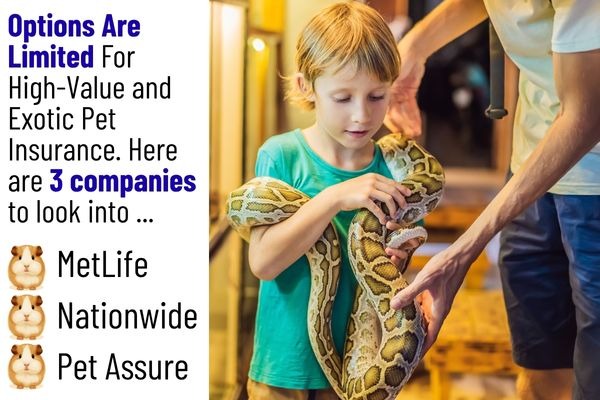
There aren’t many companies that offer coverage for exotic pets, so your options are limited when comparing prices, features, and exclusions.
- MetLife is currently a popular choice for exotic pet insurance. They offer coverage for select exotic pets in 24 states, but you must call in for a quote instead of getting one online.
- Nationwide has offered exotic pet insurance for more than four decades. Policies vary by exotic pet type, but all policies include coverage for accidents, injuries, and illnesses.
- Pet Assure offers the Mint Wellness Plan, which reimburses you for preventive care such as routine bloodwork and vaccines as well as pre-existing conditions. While this isn’t insurance, you can add it to your current policy or use it to help control vet costs.
Mortality and Major Medical Coverage for High Value Animals
If you have a horse or dog used for showing or breeding, consider animal mortality insurance. Animal mortality pays out if your pet dies from an accident or naturally. This policy bases your pet’s value on its genetics or what it’s used for. If your pet is stolen, these policies can cover you for that loss. The value of your loss isn’t always based on how much you paid for it. You may receive a higher payout if you can document a higher value, such as income from breeding, show winnings, or an independent appraisal.
Most carriers also let you add major medical to your policy. However, these policies often have limits ranging from $5,000 to $15,000. Policies typically exclude payouts if your animal dies from pre-existing conditions, age, racing injury, negligence or if it goes missing.
Liability
You should always consider adding liability to your pet insurance. If your pet injures someone or damages property, you could be liable for thousands of dollars or more. Someone could even sue you if your pet makes them sick. Yet, your home insurance policy may not cover these claims relating to your exotic pet.
Specialty insurance companies provide liability coverage that can reduce your financial risk. If your pet ends up in court, they will also cover your attorney fees. Before buying a separate policy, ask your home insurance provider whether your pet is covered and whether there are any limits to that coverage.
Why You Should Insure Your Pet
As you can see, there are many reasons why you should insure your exotic or high-value pet. From having limited access to veterinarians to losing a valuable asset. Emergency surgeries can easily cost you thousands of dollars. If you lose your horse or dog that you use for showing, you could be left without an income. Liability can cost you more than all of these combined.
Insurance rates have been increasing as well. Rate increases have outpaced policy growth due to higher average premiums. Make sure you get your pet insured while they are young and healthy.
The Bottom Line
Find coverage that fits your needs. If you have a parrot or bearded dragon as a family pet, look into accident and illness coverage. If you have a horse or dog that you show, insure them for mortality and major medical. And lastly, if your pet has the ability to harm someone, make sure you have liability coverage. Always compare at least 2 carriers and see what they offer in your state.
The information provided on this website is for general informational and educational purposes only and should not be considered legal, financial, or insurance advice. While we strive to keep content accurate and up to date, insurance laws, policies, and regulations can vary by state and may change over time.
Nothing on this site constitutes professional advice or a recommendation of any specific insurance product, provider, or strategy. You should consult with a licensed insurance agent, financial advisor, or legal professional regarding your individual situation before making any decisions.
Sources
- American Pet Products Association, 2025 U.S. Pet Industry Hits $158B, Set to Grow in 2026. Published March 26, 2026.
- American Pet Products Association, Industry Trends and Stats. Accessed September 25, 2026.
- North American Pet Health Insurance Association, State of the Industry Report – 2026 Highlights. Published June 21, 2026.
- Nationwide Insurance, Exotic Pet Insurance. Accessed September 25, 2026.
- Pet Assure, Exotic Pets. Accessed September 25, 2026.
- Prime Insurance Company, Liability Insurance for Owners of Exotic Pets. Accessed September 25, 2026.