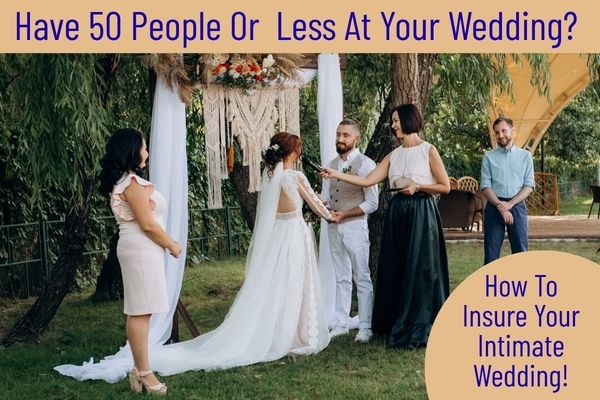
Micro-weddings with guest lists of up to 50 people deliver a more intimate, personalized experience for the couple and their friends and family. But they come with concerns you might not consider. Micro-weddings are often held in private venues, so it’s important to have the right event insurance coverage to manage liability and protect your financial interests. Just because your wedding is smaller than average doesn’t make it any less significant.
What Type of Wedding Insurance Do You Need?
Couples looking to insure a traditional or a micro-wedding on private property or in a non-traditional venue will want to consider several types of insurance, including:
- Special event liability
- Alcohol liability
- Cancellation or postponement coverage
What Is Considered a Private or Non-Traditional Wedding Venue?
Examples of private wedding venues include:
- Private homes, yards, barns, farms, or estates (yours or someone else’s)
- Private beaches, boats, or docks (yours or someone else’s)
- Vacation rental homes, where allowed and with permission from the host in writing
Other non-traditional venues, which may be public or private, include:
- Halls or recreation rooms in a condo complex, gated community, or HOA property
- Small restaurants, breweries, or cafes that don’t typically host private parties
- Retail spaces
Of course, where you hold a micro-wedding is limited only by your imagination. As a general rule, if a facility doesn’t typically host weddings, be extra diligent about understanding the insurance coverage you need.
Some commercial venues, including catering halls and other popular wedding venues, require the wedding couple to carry liability insurance, even if the venue has its own commercial general liability policy. A traditional wedding hall will probably outline your insurance obligations in the contract.
Venues accustomed to holding weddings often recommend that the couple works with the venue’s preferred partners. They know these carriers meet their contract terms. The couple will be required to list the venue as an “additional insured.”
On the other hand, a smaller venue might not be familiar with event liability insurance requirements. Their insurance may only cover typical business operations, not an event with outside vendors. That’s why it’s important to protect yourself with the right insurance coverage, whether your wedding is on private property or in an unconventional venue.
Special Event Liability Coverage
Weddings, even if they’re small and intimate, can get wild. Accidents can happen. Property, ranging from chairs to windows, can get broken or damaged. Liability coverage protects your financial interests if:
- Someone is injured at the event
- Someone causes property damage to the venue
If you’re hosting the wedding at your home or on a friend or family member’s property, you may need a liability policy because regular homeowners insurance may not cover a large, organized event.
Careful coordination is a must. You want to have the right coverage levels and types and the correct names on the policy. You may have to include the names of the couple getting married as well as the property owner or business owner.
Liability coverage limits typically range from $1 million up to $5 million. How much insurance you need depends on what the venue requires (if applicable), the number of guests, high-risk features on the property (such as a swimming pool), and even state or local requirements.
Keep in mind, your vendors should also have their own liability and property damage insurance. If a wedding guest trips over a wire and gets hurt, the DJ’s policy might cover their medical bills. Vendors may be required to list the property or venue owner as an additional insured for the day.
Exclusions Worth Noting
Some policies will not cover damages related to live animals (ranging from household pets to a petting zoo or a horse and carriage) or fireworks. If you’re planning this type of entertainment or want to have pets involved in the ceremony, ask your insurance carrier about a possible rider to the policy.
Alcohol or Liquor Liability Insurance
Some event liability policies include liquor liability coverage for the host, which is a good idea if you’re serving alcohol. For instance, Event Helper offers liquor liability included in policies starting as low as $66 for a small ceremony, according to CNBC.
Many other companies offer alcohol liability coverage as an add-on for a fee.
Your bartender should carry their own liquor liability coverage, but that may not protect the party host.
Liquor liability insurance covers you if a lawsuit, or even a potential criminal charge, arises if a guest gets drunk and hurts themselves or someone else.
Who Doesn’t Need Event Coverage
There’s a fine line between a small house party and a micro-wedding. The fact that a couple is exchanging vows doesn’t determine the need for liability coverage separate from their home insurance policy.
You may not need liability coverage for your wedding if you haven’t hired outside vendors, including bartenders, caterers, or a DJ or band.
On the other hand, if you’re hosting a big party for any occasion with alcohol, catering, tents and a DJ, you might want to consider event liability insurance.
Special Considerations for Weddings at Vacation Rental Homes
Hosting a micro-wedding at an Airbnb, VRBO, or a private vacation rental is possible, but may be more complicated. Hosting an unauthorized event at a vacation rental home could void your event liability coverage.
Airbnb explicitly prohibits “disruptive parties.” But if the guest count is small and you keep the music to acceptable levels and follow local noise ordinances, you may be able to get permission from a host to hold your wedding in their vacation rental. You may also have to get special permission to bring in a professional photographer and other vendors.
VRBO specifically lists “events allowed” rental homes. You’ll still need express permission from the guest to host a wedding and bring in outside vendors.
Whatever rental platform you use, or if you rent directly from the host, get everything in writing, including the head count, the times, the vendors you’ll be using, and how many guests will stay on the property vs. how many will leave after the event.
Again, you’ll want to purchase liability and alcohol liability insurance, with the vacation rental host listed as an additional insured.
Insurance Coverage to Protect Your Wedding Day
Wherever you hold your wedding, you may also want cancellation insurance. Many micro-weddings are carefully curated events that are as expensive as larger weddings of 100 people or more.
Cancellation or postponement insurance can protect your investment if your wedding is postponed for reasons outside of your control, such as:
- Major weather events that prevent travel and/or require postponing the event
- A problem with the venue
- Vendor cancellations
- A bride, groom, or close family member’s sudden illness or injury
- Damage, loss, or theft of wedding gifts, dress, rings, and flowers
Note that not every policy covers jewelry, gifts, or flowers. If this type of coverage is important, ask if it’s available as an add-on.
Most policies also won’t cover a bride or groom changing their mind or getting cold feet about the wedding.
While some policies cover wedding rings, your engagement ring might need separate insurance, often as a rider to your home insurance policy.
Read the fine print on the policy and shop around to find a carrier that offers the coverage levels you need at a price you can afford.
Do You Need Wedding Insurance?
For a micro-wedding on private property, liability insurance can protect your financial interests even if your home insurance doesn’t cover personal injuries or property damage during special events or elaborate celebrations.
Cancellation insurance protects your investment on your special day. Even if vendors cancel, the weather doesn’t cooperate, or someone important to the ceremony gets sick, you won’t lose all your money and can reschedule the event.
Conclusion
If you’re hosting a micro-wedding on private property or in a non-traditional venue, you’ll want the appropriate insurance coverage to protect yourself and your wedding guests.
A wedding is a large investment, with the average event costing $34,200, according to data from The Knot. For just a few hundred dollars, wedding insurance buys important peace-of-mind on your big day.
Before you choose a carrier, make sure to ask about what’s covered, what’s excluded, and who should be named on the policy.
Sources
https://www.geico.com/event-insurance
https://www.policygenius.com/homeowners-insurance/does-home-insurance-cover-you-when-hosting-a-party
https://www.insurancecanopy.com/blog/event-insurance-to-host-a-wedding
https://www.theknot.com/content/wedding-insurance-101
https://www.cnbc.com/select/best-wedding-insurance
https://touchstay.com/blog/how-to-have-a-wedding-at-an-airbnb
https://weddingphotographyandfilms.com/wedding-blog/do-you-really-need-wedding-insurance
https://www.theknot.com/content/average-wedding-cost